TL;DR:
- Thryv offers a packaged CRM platform suitable for local service businesses, starting at $149 monthly. Southwind Connect℠ provides tailored customization and agency-backed support for rural and community organizations. Choosing the right CRM depends on workflow fit, pricing transparency, and the level of human support needed.
Thryv is defined as an all-in-one small business platform that bundles CRM, invoicing, appointment scheduling, review management, and marketing tools into a single subscription. Southwind Connect℠ is a customizable, agency-backed CRM and marketing automation platform built and supported directly by Southwind Marketing. The core difference in this Thryv vs. Southwind Connect℠ comparison is not just features. It is whether your business needs a packaged SaaS product or a tailored platform with hands-on agency support behind it. For small business owners in rural communities, service industries, and local markets, that distinction shapes everything from day-one setup to long-term cost.
What pricing models and contract terms differentiate Thryv and Southwind Connect℠?
Thryv pricing starts at $149 per month, with standard contracts running 6–12 months. That commitment is not a minor detail. Switching costs and contract locks often matter more than the monthly sticker price, especially when bundled SEO and reputation tools take months to show ROI.
Southwind Connect℠ uses customized pricing built around each client's actual needs. There are no rigid tiers that force you to pay for features you will never use. That model works especially well for rural small businesses and community organizations where budgets are tight and needs are specific.
Key pricing factors to evaluate before signing any CRM contract:
- Monthly vs. annual commitment. Thryv's 6–12 month contracts mean you are locked in before you fully know if the platform fits your workflow.
- Per-seat vs. flat-rate fees. Per-seat pricing escalates sharply as your team grows, while flat-rate models offer predictable monthly costs.
- Bundled features vs. add-on costs. Thryv bundles most tools into its base price. Southwind Connect℠ builds the feature set around what you actually need.
- Total cost of ownership. Factor in onboarding time, staff training, and any integration work, not just the monthly fee.
Pro Tip: Before committing to any platform, calculate what you would pay at twice your current team size. Per-seat pricing that looks affordable today can double your CRM bill within 18 months.
How do onboarding, support, and customer success compare?
Onboarding is where most small businesses lose time and money on CRM adoption. Thryv offers dedicated success managers as part of its SaaS model. That is a real advantage over generic self-serve platforms. But the support still operates within a structured SaaS framework, meaning your success manager follows a defined playbook rather than adapting to your specific business context.
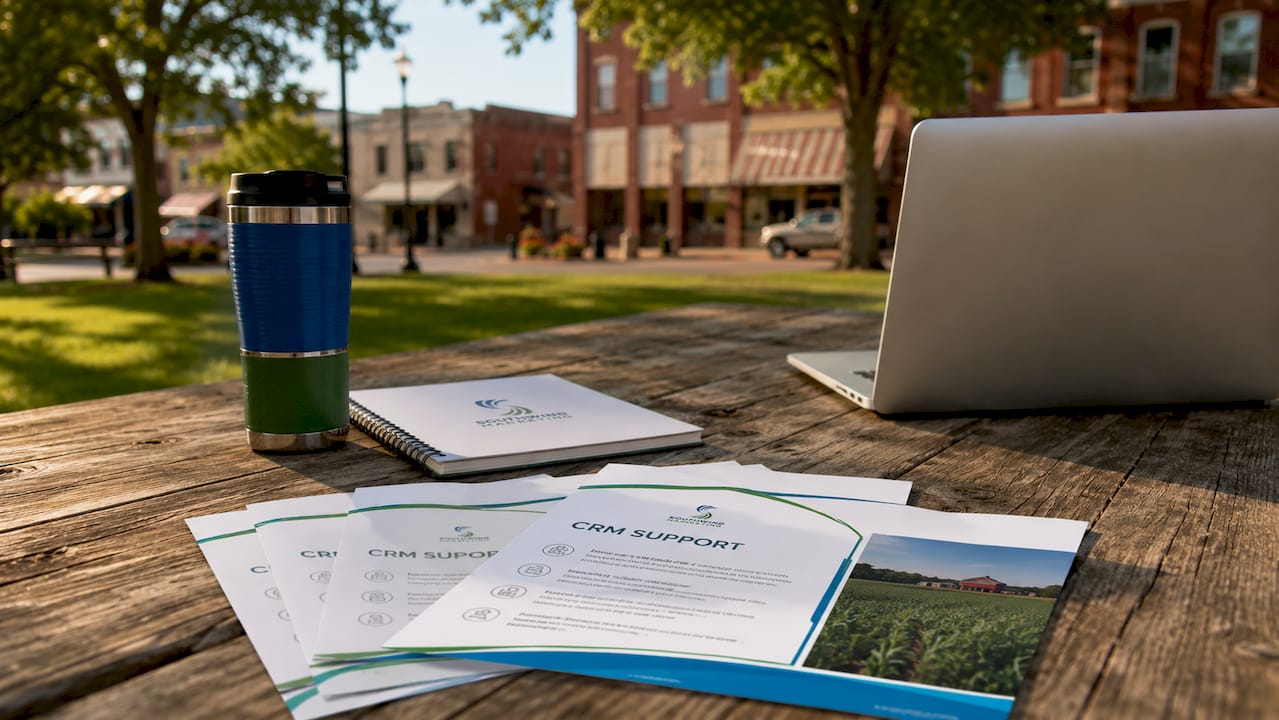
Southwind Connect℠ combines platform access with direct agency partnership. Onboarding is not a checklist. It is a collaborative process where the Southwind Marketing team learns your workflows, your audience, and your goals before configuring anything. That matters most for businesses that are not tech-heavy or that operate in rural markets where generic SaaS support often misses the mark.
What to look for in CRM onboarding before you commit:
- Dedicated human contact. Know whether you get a named person or a rotating support queue.
- Customized setup vs. template configuration. Template setups are faster but often require significant rework within 90 days.
- Training format. Video libraries work for some teams. Live walkthroughs work better for others, especially in small towns where staff may have limited tech experience.
- Ongoing support model. Thryv provides SaaS-tier support. Southwind Connect℠ provides ongoing agency-level consulting as your business evolves.
A real pilot using actual business data over a minimum of 30 days is the most reliable way to assess implementation cost and user adoption beyond what any free trial reveals.
Pro Tip: Ask any CRM vendor to show you the exact support ticket process. If the answer involves a chatbot before a human, that is your answer about what ongoing support actually looks like.
What operational workflows and feature sets fit different business types?
Thryv is purpose-built for local service businesses. Industry-specific workflows for plumbing, legal, and healthcare come pre-configured in Thryv's platform bundles. That means a plumber or a clinic can be operational on day one without building anything from scratch. For businesses that fit squarely into those categories, that out-of-the-box usability is a genuine advantage.
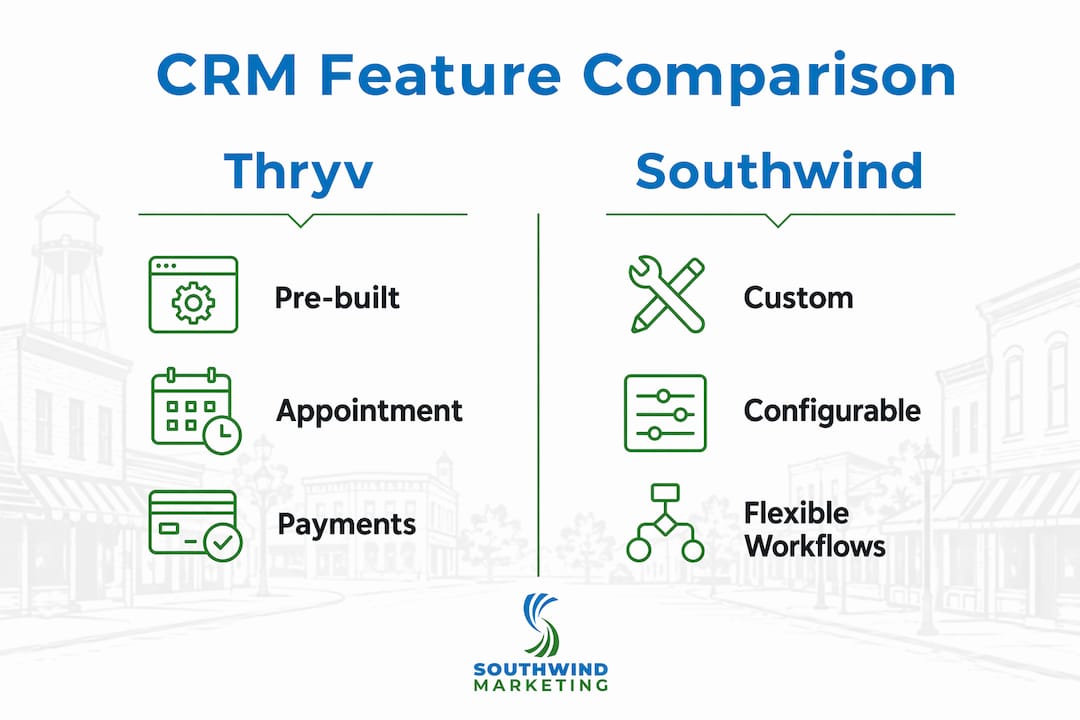
Southwind Connect℠ takes a different approach. Rather than pre-loading industry templates, the platform is configured around your specific workflow, your customer lifecycle, and your broader marketing strategy. That includes integration with SEO, content marketing, and social media for small businesses in ways that go beyond what a standalone CRM typically handles.
The table below compares operational fit by business type and need.
| Business need | Thryv | Southwind Connect℠ |
|---|---|---|
| Appointment scheduling and payments | Pre-built, ready on day one | Configurable to match existing workflow |
| Review and reputation management | Bundled in base plan | Integrated with broader reputational SEO strategy |
| Rural and community-centered businesses | Generic local service focus | Built with rural context and agency support |
| SEO and content marketing integration | Limited to bundled tools | Full agency integration available |
| Customization depth | Fixed feature tiers | Tailored per client |
Rural small businesses often have workflows that do not map neatly onto urban service business templates. A Main Street retailer, a rural chamber of commerce, or a downtown development authority needs a platform that adapts to their reality, not one that forces them to adapt to the software.
The best CRM is the one your team will actually use every day. More features do not equal more value, especially for teams under 15 people where complexity kills adoption.
What are the long-term scalability and cost implications?
Scalability in CRM pricing is not just about adding users. It is about whether your costs stay predictable as your business grows. Per-seat pricing models multiply with headcount, and what starts as a manageable monthly fee can become a significant line item within two years. Flat-rate platforms remove that uncertainty.
Thryv's pricing structure tops out at $299 or more per month depending on the plan. Annual or multi-month commitments mean you are locked in for the duration, which creates real switching costs if your needs change. Southwind Connect℠ adjusts pricing and features as clients grow, supported by ongoing agency consulting rather than a fixed renewal cycle.
Here is a practical framework for projecting long-term CRM costs:
- Simulate costs at 2x your current team size. If per-seat pricing doubles your bill, factor that into your decision now.
- Read the cancellation policy before signing. Multi-month contracts with automatic renewal clauses are common. Know what you are agreeing to.
- Identify which features you will actually use in year two. Many small businesses overestimate future CRM needs and pay for enterprise features they never touch.
- Ask about feature expansion costs. Does adding a new workflow or integration cost extra, or is it included?
- Factor in the cost of switching. Moving your data, retraining staff, and rebuilding automations takes real time and money.
Pro Tip: Run a 12-point CRM evaluation using real customer data, not demo data. Test pipeline flexibility and automation with actual records from your business before you commit to any contract.
Key Takeaways
The right CRM for a small business depends on workflow fit, pricing transparency, and the quality of human support, not feature count alone.
| Point | Details |
|---|---|
| Pricing structure matters long-term | Thryv's 6–12 month contracts and per-seat risks require careful total cost analysis before signing. |
| Onboarding quality drives adoption | Agency-backed onboarding from Southwind Connect℠ outperforms template setups for non-technical teams. |
| Feature fit beats feature count | Pre-built service workflows in Thryv suit local trades; Southwind Connect℠ suits businesses needing custom configuration. |
| Scalability requires cost simulation | Projecting costs at 2x team size reveals whether flat-rate or per-seat pricing fits your growth path. |
| Rural businesses need tailored support | Generic SaaS support models often miss the specific needs of rural and community-centered organizations. |
What I have learned comparing these platforms for rural clients
I have worked with rural small businesses, chambers, and community organizations long enough to know that the platform decision is rarely about features. It is about who picks up the phone when something breaks at 4:30 PM on a Friday before a big event.
Thryv is a genuinely good product for what it is designed to do. A plumber in a mid-sized city who needs scheduling, payments, and reviews in one place will get real value from it on day one. The pre-configured workflows are not marketing fluff. They work. But that model assumes your business fits the template, and a lot of rural businesses do not.
What I have seen repeatedly is that small towns and community organizations need a platform that bends to their reality. A downtown development authority running a retail recruitment campaign, a rural chamber managing member communications, or a tourism bureau tracking visitor inquiries, none of those fit neatly into a local plumber's CRM workflow. Southwind Connect℠ was built with that reality in mind, and the agency support behind it means you are not figuring out customization alone.
The uncomfortable truth about CRM selection is that most small businesses choose based on a demo, not a real pilot. A 30-day test with actual customer data tells you more than any sales presentation. If a vendor resists that, take it as a signal.
— Damien Denmark
Southwind Connect℠ is built for businesses that need more than software
Southwind Marketing built Southwind Connect℠ for the clients that generic SaaS platforms consistently underserve: rural small businesses, chambers of commerce, Main Street programs, and community organizations that need a CRM and marketing platform configured to their actual workflow, not a template designed for urban service trades.
Southwind Connect℠ comes with direct agency support, customized onboarding, and full integration with SEO, content, and digital marketing strategy. Pricing is built around your needs, not a rigid tier. If you are evaluating your options and want to see what a tailored platform backed by a real marketing team looks like, Southwind Marketing offers personalized demos and strategy consultations. Explore website design and digital marketing services or contact the Southwind Marketing team directly to start the conversation.
FAQ
What does Thryv cost per month?
Thryv pricing starts at $149 per month, with standard contracts running 6–12 months. Higher-tier plans exceed $299 per month depending on features selected.
Is Thryv worth it for a small local service business?
Thryv is well-suited for local service businesses like plumbers, contractors, and clinics that need appointment scheduling, payments, and review management in one pre-configured platform. Businesses with more complex or custom workflows may find a configurable alternative a better fit.
How does Southwind Connect℠ differ from Thryv?
Southwind Connect℠ is built and supported directly by Southwind Marketing, offering customized pricing, tailored onboarding, and full integration with agency-level SEO and marketing services. Thryv is a self-serve SaaS product with fixed tiers and standardized support.
What is the biggest risk when choosing a CRM for a small business?
The biggest risk is signing a 6–12 month contract before running a real pilot with actual business data. Switching costs, retraining time, and data migration make changing platforms expensive once you are locked in.
Can rural businesses use Thryv effectively?
Thryv works for rural businesses that fit its local service business model. Rural organizations with unique workflows, such as chambers of commerce, downtown development authorities, or tourism bureaus, typically need a more customizable platform with direct human support.