
A well-designed small city website — built for task completion, ADA compliance, and place marketing — directly reduces staff workload, raises resident satisfaction, and supports small-business retention and talent attraction. That is not a theory. User research confirms that the highest-traffic municipal pages are transactional: trash schedules, bill pay, permits, and meeting minutes. When residents can complete those tasks online without calling city hall, staff hours free up for higher-value work. When prospective businesses and remote workers find a professional, informative site, they stay longer and inquire more. How small towns boost economic development often starts with this deceptively simple asset: a website that actually works.
Four priorities you can act on today:
- Task-first navigation: Put bill pay, permits, and meeting agendas one click from the homepage.
- Mobile performance: Test your site on a phone. If it loads slowly or menus collapse poorly, fix that before anything else.
- ADA compliance: Run an automated scan with a tool like WAVE or axe, then schedule a manual audit. Ada makes clear that government websites must be accessible and that automated checks alone are not enough.
- Clear contact pages: Every department needs a name, phone number, and email — not a generic form.
Key Takeaways
Small towns that treat their municipal website as economic infrastructure — not just a communications tool — see measurable gains in resident satisfaction, staff efficiency, and business attraction.
| Point | Details |
|---|---|
| Task-first design reduces staff workload | Bill pay, permits, and meeting minutes on the homepage cut routine calls and emails to city hall. |
| ADA compliance is an ongoing requirement | Pair automated scans with manual audits; government sites must meet accessibility standards continuously. |
| Incremental investment outperforms big bets | Phase improvements over 90 days, 6 months, and 12–36 months to match local budget and capacity. |
| Place marketing converts browsers to prospects | Specific pages on housing, broadband, and local employers attract remote workers and site selectors. |
| Southwind Marketing serves rural governments | Southwind builds task-first, ADA-compliant websites for small cities, EDOs, and chambers across rural America. |
Table of Contents
- Why place-based web strategies work for small-town growth
- Core website strategies that drive local economic outcomes
- Step-by-step implementation: timelines, budgets, and KPIs
- What small towns that got this right actually did
- Why entrepreneurial social infrastructure is worth measuring
- How does small-business retention connect to downtown revitalization?
- Does broadband infrastructure affect small-town economic growth?
- What quality-of-life investments actually retain residents?
- How do partnerships and governance strengthen small-town economies?
- How does workforce development fit into small-town economic strategy?
- How can small towns attract outside investment and new talent?
- The part most small towns get wrong about digital investment
- Southwind Marketing builds websites that work for small cities
- Sources
- FAQ
Why place-based web strategies work for small-town growth
Modern rural economic development has moved away from chasing large employers toward locally led, strengths-based strategies. Brookings research finds that retaining and expanding existing small businesses, paired with quality-of-life investments, correlates with population growth, job creation, and new startup activity. A municipal website fits squarely into this model because it is the digital front door to everything that makes a place worth living in and doing business in.
The concept of entrepreneurial social infrastructure matters here. It describes the networks of trust, civic partnerships, and locally led action that allow communities to solve problems without waiting for outside rescue. A well-maintained website signals that local government is organized, transparent, and responsive. That signal builds trust. Trust, in turn, attracts residents, businesses, and investors who want to put roots somewhere stable.
EPA smart growth guidance reinforces the same logic: incremental, asset-focused investments that match local capacity outperform single large bets. A phased website project — fix the task pages first, add place-marketing content later — is exactly this kind of smart, scalable investment. UNC School of Government case studies add a governance dimension: durable results require balancing short-term wins with long-term capacity building, which is why training staff to maintain the site matters as much as the launch itself.
Core website strategies that drive local economic outcomes
Resident services: task-first UX
Design your site around what residents actually come to do. Platform-based CMS solutions — such as Civic Plus, GovOS, or a well-configured WordPress build — give small towns a manageable, cost-effective foundation without requiring in-house developers.
Checklist:
- Online bill pay linked from the homepage
- Permit applications downloadable or submittable online
- Meeting agendas and minutes posted within 48 hours of each meeting
- Public notices section with date-stamped entries
- Department directory with direct staff contacts
- Mobile-responsive layout tested on Android and iOS
- Page load time under three seconds on a 4G connection
Small-business enablement
Your website can actively support local business growth by making the town visible to shoppers, site selectors, and investors.
- Local business directory with categories, hours, and links
- "Shop local" landing page tied to seasonal campaigns
- Links to business license applications and zoning information
- A dedicated page for available commercial properties
Place marketing and tourism
A tourism or "visit us" section converts curious browsers into overnight guests. Connect it to your rural festival and events calendar and keep it updated year-round. Static pages that haven't changed in two years do more harm than good.
Workforce and talent attraction
Remote workers are choosing small towns at a rate that would have seemed unlikely a decade ago. A dedicated page covering housing inventory, internet speeds, schools, and cost of living gives those prospects the information they need to make a decision. McKinsey's framework identifies community and connectivity as one of three baseline elements for thriving rural places — your website is the primary digital expression of both.
Pro Tip: If you have no IT staff, start with a hosted government CMS platform. You get security patches, ADA updates, and hosting support bundled in. Custom builds are rarely the right first move for towns under 10,000 residents.
Funding for these projects often comes from USDA Community Facilities grants, EDA Public Works and Economic Adjustment programs, and state Main Street program technical assistance funds. Treat these as categories to explore with your state's rural development office, not a single application process.
Step-by-step implementation: timelines, budgets, and KPIs
90-day quick wins
- Audit your current site for broken links, missing contacts, and pages that require more than two clicks to reach.
- Fix mobile layout and page speed (compress images, remove unused plugins).
- Add or update bill pay, permit, and meeting-minutes pages.
- Run an automated ADA scan and remediate the highest-priority errors.
- Set up Google Analytics 4 or a comparable tool to start collecting baseline traffic data.
6-month build-out
- Launch a local business directory and a "why live here" page.
- Add a tourism or events section with a maintained calendar.
- Train one staff member as the site's content owner.
- Conduct a resident satisfaction survey (see Section 6 below) to identify remaining friction points.
12–36 month maturation
- Add a remote-worker or talent-attraction page with housing and amenity data.
- Integrate a data dashboard showing local economic indicators.
- Pursue USDA or EDA grant funding for a full redesign if the platform is aging.
- Schedule annual ADA audits pairing automated tools with manual review.
Sample budget ranges
KPIs to track
- Reduction in routine phone calls and emails to city hall (track monthly)
- Page completion rate for bill pay and permit pages
- Local business directory page views
- Resident satisfaction scores from annual surveys
- Time elapsed between a meeting and the posting of its minutes
What small towns that got this right actually did
Greensburg, Kansas rebuilt its entire municipal infrastructure after a 2007 tornado and used the process to redesign its digital presence alongside its physical one. The town committed to sustainability and transparency as brand pillars, which carried through to its website and communications. The result was national media attention and a measurable uptick in tourism and business inquiries.
Paducah, Kentucky launched an artist relocation program paired with a dedicated web presence that listed available properties, program benefits, and community resources. The program filled dozens of vacant downtown buildings and generated significant local press coverage that drove further inquiries.
Fairfield, Iowa built a reputation as a remote-worker destination partly by maintaining a clear, well-organized web presence that answered the questions out-of-state prospects actually ask: internet speeds, housing costs, schools, and community events.
The consistent lesson across these cases: towns that combined a clear digital presence with an inclusive local governance process saw more durable results than those that relied on a single program or outside investment. — UNC School of Government
Lessons learned:
- A website alone does not drive growth. It amplifies what is already working on the ground.
- Keeping content current matters more than having a beautiful design at launch.
- Resident and business input — gathered through surveys or public meetings — improves both the site and community trust in local government.
Why entrepreneurial social infrastructure is worth measuring
Brookings frames entrepreneurial social infrastructure as the civic relationships and trust that allow communities to act on local opportunities. It is hard to quantify, but ignoring it means missing the factor that most often separates towns that sustain growth from those that stall after a single project.
Practical measurement tools:
- Importance-Satisfaction surveys: Ask residents to rate both how important a service is and how satisfied they are with it. The gap between those two scores tells you exactly where to invest. Southwind Marketing's Civic Intelligence℠ program is built on this methodology.
- Local business retention interviews: A structured annual conversation with 10–15 business owners surfaces concerns before they become vacancies.
- Network-mapping indicators: Track the number of active civic organizations, cross-sector partnerships, and public-private collaborations. Growth in these numbers usually precedes economic growth.
Short metrics to collect in your first resident survey:
- Satisfaction with online services (bill pay, permits, information access)
- Frequency of task completion without a phone call
- Ease of finding local business information on the town website
Pro Tip: Run your first survey before you redesign the site. The data tells you what to fix and gives you a baseline to measure improvement against — which is exactly what you need when reporting results to a council or grant funder.
How does small-business retention connect to downtown revitalization?
Retaining existing businesses is almost always cheaper than recruiting new ones. Brookings research on downtown revitalization shows that place governance paired with inclusive local leadership supports small-business survival and equitable recovery. For Main Street programs and downtown development authorities, that means three concrete actions: keeping storefronts occupied, supporting entrepreneurs with technical assistance, and making the downtown physically inviting.

A Main Street marketing strategy that includes a strong web presence, active social channels, and a maintained business directory gives local retailers the visibility they need to compete with online alternatives. Facade improvement grants, pop-up retail programs, and business incubator space are all tools that work better when they are promoted through a well-maintained digital channel.
Does broadband infrastructure affect small-town economic growth?
Yes, and the gap between towns with reliable high-speed internet and those without is widening. Broadband is now a prerequisite for remote work, telehealth, precision agriculture, and e-commerce — all of which are economic lifelines for rural communities. Towns that have secured funding through USDA ReConnect grants or state broadband offices have seen measurable increases in remote-worker inquiries and small-business formation.
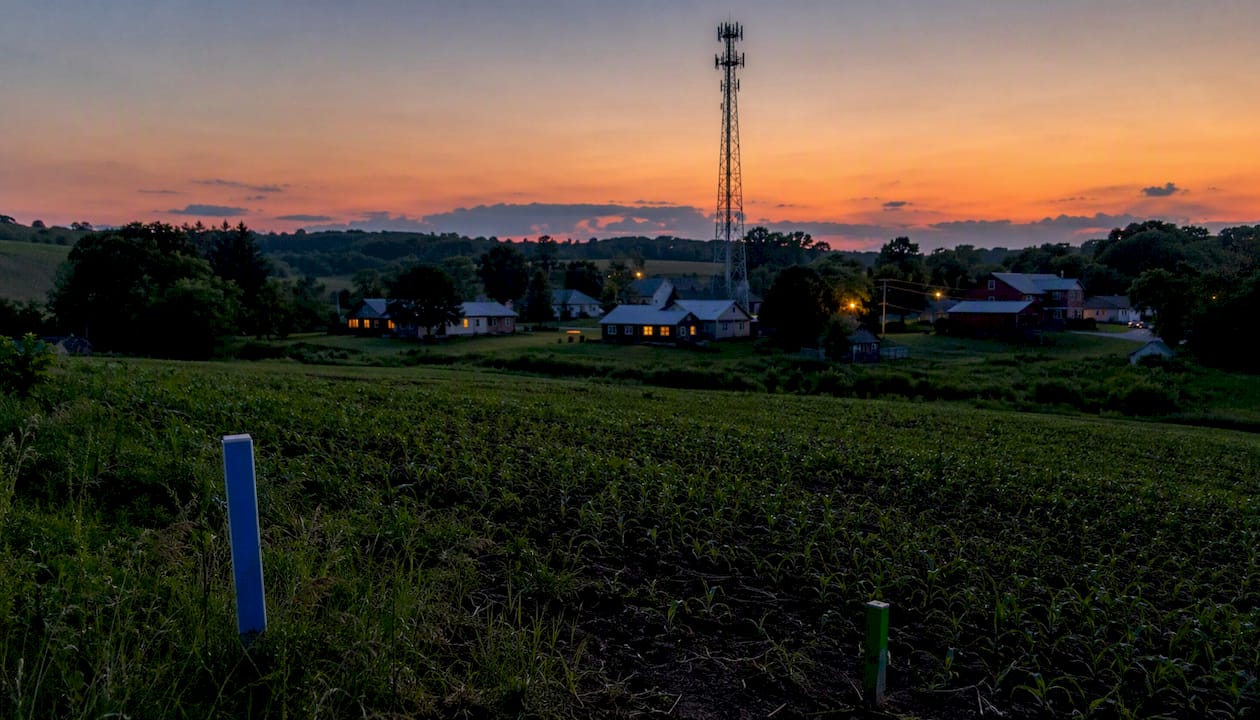
Transportation and the built environment matter alongside broadband. Sidewalks, crosswalks, and accessible public spaces signal that a town is invested in quality of life. EPA smart growth principles recommend incremental improvements to the built environment that match local budgets — repaving a key pedestrian corridor costs far less than a full streetscape project and delivers visible results quickly.
What quality-of-life investments actually retain residents?
Housing availability is the most frequently cited barrier to growth in small towns. When workers take a job in a rural community and cannot find a suitable place to live, they commute from elsewhere or decline the offer entirely. Addressing this requires a combination of zoning reform, housing incentive programs, and clear communication about what is available — including a housing inventory page on the municipal website.
Child care is a close second. Communities that have partnered with local employers to subsidize child care slots or that have recruited a new provider have seen direct impacts on workforce participation. Amenities — parks, trails, restaurants, arts programming — matter more to younger workers than previous generations of economic developers expected. These are not soft factors. They are retention tools.
How do partnerships and governance strengthen small-town economies?
No city hall can do this alone. The most effective small-town economic strategies involve a coalition: the municipality, the chamber of commerce, the economic development organization, local employers, and civic groups. Each partner brings a different network and a different set of resources.
Formal structures help. A memorandum of understanding between the city and the chamber, a joint economic development committee, or a shared data dashboard that all partners can access creates accountability and reduces duplicated effort. Digital marketing strategies that are coordinated across the city website, the chamber site, and social channels reach more people with a consistent message than siloed efforts ever will.
How does workforce development fit into small-town economic strategy?
Workforce is one of McKinsey's three baseline elements for rural economic success, and it is the one most often underfunded at the local level. Small towns cannot build a four-year university, but they can do several things that move the needle:
- Partner with the nearest community college to offer certificate programs tied to local employer needs (welding, healthcare, CDL licensing, IT support).
- Use the municipal website to post job openings from local employers alongside city positions.
- Promote apprenticeship programs through the Department of Labor's Apprenticeship registry.
- Coordinate with the state workforce agency to bring mobile career services or job fairs to town.
Workforce pages on the city website that list local employers, open positions, and training resources serve double duty: they help current residents find opportunities and signal to prospective residents that the local economy is active.
How can small towns attract outside investment and new talent?
The answer is visibility and specificity. Site selectors, remote workers, and outside investors all conduct online research before they make contact. A town that does not appear in search results, or that has a website with outdated information and no clear value proposition, loses those prospects before the conversation starts.
Place-marketing content that speaks directly to what businesses and workers care about — available sites, labor force data, quality of life, incentive programs — is more effective than generic "great place to live" copy. Specific beats vague every time. A page that lists available industrial buildings with square footage, utilities, and zoning beats a page that says "we welcome new businesses."
Social media, targeted digital advertising, and presence in site-selector databases like CoStar and the IEDC's site-selection resources extend reach beyond organic search. Coordinating these channels through a shared economic development marketing strategy keeps the message consistent and the budget accountable.
The part most small towns get wrong about digital investment
The conventional wisdom in rural economic development circles is that a website is a communications tool — something you update when you have news. That framing undersells it badly. A municipal website is an economic infrastructure asset, in the same category as a water line or a road. When it fails — slow load times, broken links, inaccessible content, outdated business information — it imposes a real cost on residents, businesses, and the staff who field the resulting phone calls.
The towns that get the most out of their digital investment treat the website as a living system with an owner, a maintenance schedule, and a budget line. They measure it the same way they measure other infrastructure: is it performing, is it accessible to everyone, and is it serving the people who depend on it?
The other mistake is waiting for a perfect plan before starting. The EPA's incremental smart growth approach applies here too. Fix the task pages this quarter. Add the business directory next quarter. Launch the talent-attraction page after that. Small, consistent improvements compound over time in ways that a single large redesign often does not.
Southwind Marketing builds websites that work for small cities
Rural city managers and clerks do not have time to manage a web project on top of everything else. Southwind Marketing builds websites specifically for small city governments, economic development organizations, and chambers of commerce across rural America. The work covers task-first navigation, ADA compliance, mobile performance, place-marketing content, and Civic Intelligence℠ survey integration — all without requiring an in-house IT team to maintain it afterward.
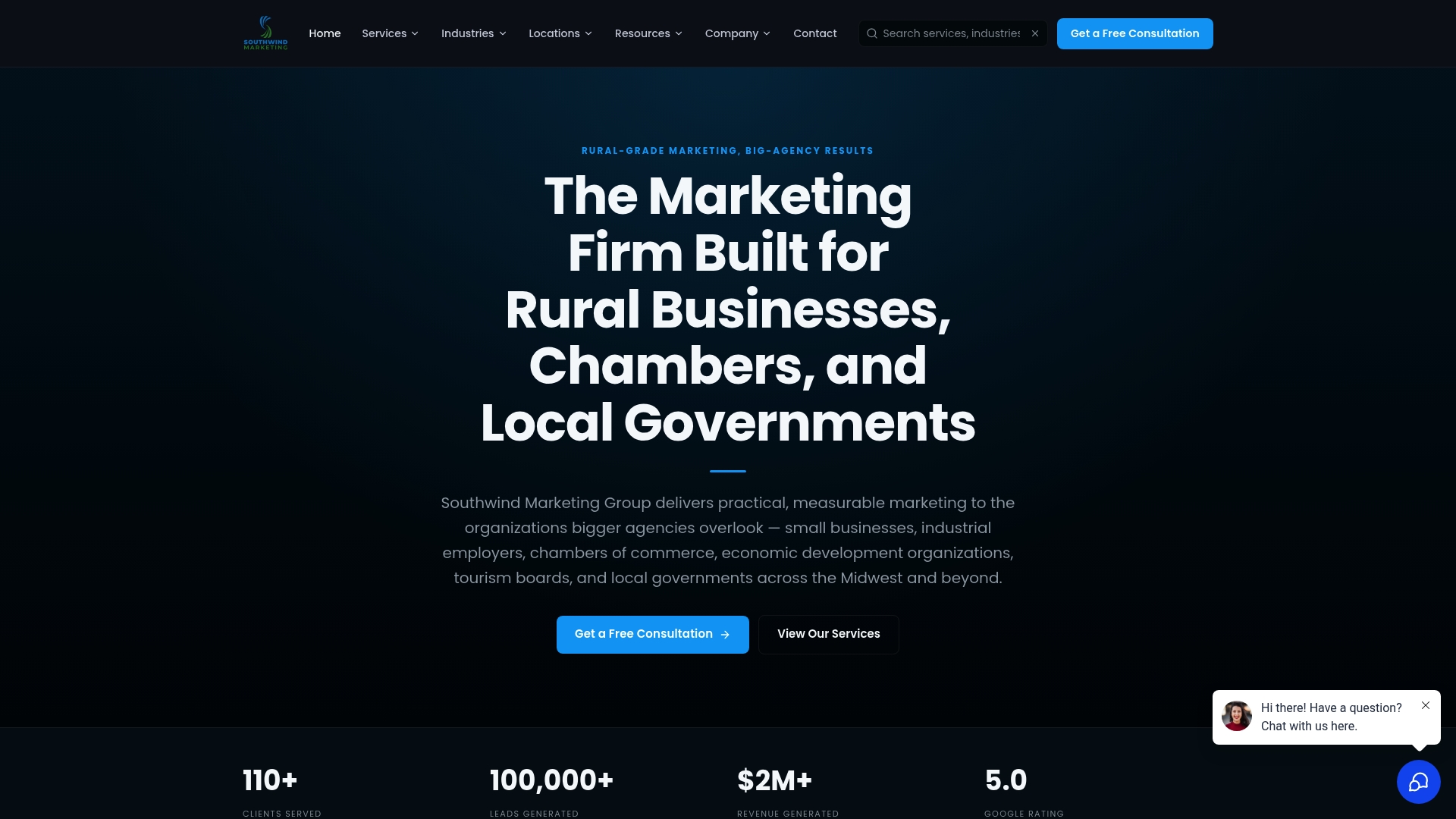
The difference between a Southwind site and a generic template is that every build starts with what your residents and businesses actually need to do online, not what looks good in a demo. If you are not sure where your current site stands, start with a free 10-minute website audit. It takes ten minutes and gives you a clear picture of what to fix first.
Sources
- New approaches to economic development in rural America | Brookings
- Smart Growth in Small Towns and Rural Communities | EPA
- Rural rising: Economic development strategies for America’s heartland | McKinsey
- Ada
- What Residents Actually Want From a Town Website • Leovoid
- Lessons Learned - UNC School of Government
FAQ
How can small cities encourage economic development?
Small cities see the strongest results by retaining and expanding existing businesses, investing in quality-of-life assets, and making local government easy to access online. A task-focused municipal website, paired with a local business directory and place-marketing content, reduces friction for residents and signals to outside investors that the community is organized and open for business.
What makes a small town successful economically?
McKinsey's research points to three baseline elements: a viable economic sector, a trained local workforce, and strong community connectivity. Towns that invest in all three — including the digital infrastructure that supports connectivity — tend to sustain growth more reliably than those focused on a single large project.
What are the benefits of growing up and doing business in a small town?
Lower cost of living, shorter commutes, stronger civic networks, and a more visible role in local decision-making are consistent advantages. For businesses, lower commercial rents and a loyal local customer base often offset the smaller market size, particularly when the town maintains a strong digital presence that extends reach beyond its borders.
How much does a small city website typically cost?
A basic platform-based launch runs roughly $3,000–$8,000; a mid-range redesign with ADA remediation and custom design typically falls in the $10,000–$25,000 range, based on industry observations. For towns considering a full custom build, costs will vary widely based on project scope and ongoing support, and are typically higher than the mid-range redesign. Costs vary based on platform choice, content volume, and integration requirements. USDA Community Facilities grants and EDA planning funds can offset a portion of these costs for eligible municipalities.
Does a municipal website need to be ADA compliant?
Yes. ADA.gov guidance states that state and local government websites must be accessible to people with disabilities. Compliance requires a combination of automated scanning tools and manual audits, and it is an ongoing operational requirement — not a one-time checkbox at launch.