For most ecommerce stores, email marketing produces higher, more predictable revenue per dollar than social media. Email wins on conversion and retention because you own the list. Social wins on cold discovery and works best for brand-new stores or highly visual products with no audience yet. The winning move is sequencing them together: social for reach, email for revenue.
TL;DR:
- Building an owned email list is essential, especially for small stores, because it provides consistent revenue and controls over messaging.
- Email marketing delivers roughly $36 to $42 in return per dollar spent, outperforming social media advertising, which requires ongoing ad spend to maintain reach.
- For stores with fewer than 500 subscribers, initial focus should be on driving traffic to grow the list, while larger audiences should prioritize retention and segmentation.
- Social media is better suited for brand discovery, while email excels at converting interested browsers into buyers and fostering repeat sales.
- Combining social for reach and email for revenue through strategic sequencing creates the most effective ecommerce growth approach.
Table of Contents
- Email Marketing vs Social Media for Ecommerce: The Quick Comparison
- What Do the Benchmarks Actually Show?
- How Much Does Each Channel Cost to Run?
- Which Channel Should You Prioritize Right Now?
- How Do You Combine Social and Email for the Best Results?
- What Should You Actually Measure?
- What Tools Do You Actually Need?
- Southwind Marketing's Experience With Rural Ecommerce Growth
- Why Algorithm Changes Hit Social Harder Than Email
- How Long Does a Typical Campaign Take to Plan and Launch?
- How Do Segmentation and Targeting Differ Between the Two Channels?
- Get the Sequencing Right Before You Scale Either Channel
- How Southwind Marketing Helps You Build This Playbook
- Sources
- FAQ
Email Marketing vs Social Media for Ecommerce: The Quick Comparison
The core difference comes down to ownership. Your email list belongs to you. Your social following belongs to the platform, and the platform can change the rules on you overnight. That distinction drives almost every other trade-off between the two channels.
Email and social also play different roles in the buying journey. Social media does its best work at the top of the funnel, putting your product in front of people who have never heard of you. Email does its best work at the bottom, turning browsers into buyers and buyers into repeat customers. Trying to force one channel to do the other's job is where most rural and small-town ecommerce brands waste money.
Here's how the two channels stack up on the factors that matter most for a small or mid-market store:
- Ownership: Email is an owned channel. You control the list, the timing, and the message. Social is rented distribution. Instagram, Facebook, and TikTok can throttle your reach anytime they adjust an algorithm.
- Funnel role: Social media introduces your brand to strangers. Email converts people who already know you and re-engages people who already bought.
- Cost profile: Email scales with your list size and mostly costs you time and a monthly platform fee. Social requires continuous ad spend to maintain visibility, since organic reach on most platforms has been declining for years.
- Best fit for DTC brands: A visually driven direct-to-consumer brand often needs social for product discovery, then leans hard on email once it has 1,000 or so subscribers.
- Best fit for small shops: A small shop with a loyal local or regional customer base usually gets more return building out email flows first, since the audience already exists.
- Best fit for early-stage brands: A brand with zero audience needs social or paid discovery to generate the first wave of traffic, because email has nothing to send to yet.
What Do the Benchmarks Actually Show?
The numbers are not close. Email marketing delivers a return of roughly $36 to $42 for every $1 spent, according to industry benchmark analyses that track ecommerce campaigns across sectors. Social media advertising, even when it performs well, rarely gets close to that multiple once you account for ongoing ad spend.
Open and click-through rates tell the same story. Email open and click-through rates in North America consistently outperform engagement rates on most social channels, giving email a direct-response advantage that social struggles to match. Meanwhile, social media advertising click-through rates run substantially lower, and organic social posts typically reach only a small fraction of your follower base without paid boosting.
A comparative industry analysis of ecommerce revenue by channel found email generating dramatically more revenue per dollar spent than social in side-by-side testing, reinforcing the owned-versus-rented advantage that email holds structurally.
Here's what that looks like when you run rough numbers on a small store:
| Metric | Email Marketing | Social Media (Paid) |
|---|---|---|
| Typical engagement signal | Higher open/click rates than most social channels (Statista) | Lower CTR than email, and declining organic reach (Statista) |
| Estimated ROI | Roughly $36 to $42 per $1 spent (Omnisend) | Generally far lower once ad spend is factored in |
| Ongoing cost driver | List size and platform tier | Continuous ad budget to maintain reach |
| Audience ownership | Owned by the business | Owned by the platform |
Pro Tip: Model your own numbers before trusting any industry average. Take your average order value, multiply it by your email list size and a conservative 1 to 2 percent conversion rate on a single campaign, then compare that to what the same dollar amount in ad spend would need to return just to break even.
A quick example: a store with 3,000 subscribers sending one well-built campaign at a 1.5 percent conversion rate and a $60 average order value generates roughly $2,700 in revenue from a send that costs almost nothing beyond the platform fee. Getting that same $2,700 from paid social usually requires real ad spend behind it, every single time you want to repeat the result.
How Much Does Each Channel Cost to Run?
Email is cheap to scale and expensive to ignore. Once you're paying for a plan tier, sending to 10,000 subscribers costs barely more than sending to 1,000. Social media works in reverse. Every dollar of reach usually requires another dollar of ad spend, and that cost climbs as more advertisers compete for the same audience.
Here's a realistic breakdown of what each channel demands from a small ecommerce team:
- Email platform costs: Monthly fees that typically scale with subscriber count, plus your time to write and design campaigns.
- Social production costs: Photo and video content, which takes real time to shoot and edit, especially for platforms that favor short-form video.
- Social ad spend: An ongoing budget line that never really stops, since paused ads mean paused reach.
- Time investment for email: Roughly 3 to 5 hours a week for a lean program covering one campaign and basic flow maintenance.
- Time investment for social: Often 5 to 10 hours a week once you count content creation, scheduling, and community replies.
Pro Tip: If your team is stretched thin, batch a month of social content in a single afternoon using your existing product photography, and reinvest the time you save into building out one more email automation. Automations run themselves after setup; social content does not.
The marginal cost curve is the real story here. As your email list grows, your cost per contact drops. As your social spend grows, your cost per impression usually rises, because you're bidding against more advertisers for the same eyeballs.
Which Channel Should You Prioritize Right Now?
The right answer depends entirely on where your store stands today. Use these thresholds as a rough guide:
- Zero to 500 subscribers: Focus on discovery. Run small paid social tests or organic content to drive traffic to a minimum viable landing page with a lead magnet. Your only job at this stage is converting strangers into email subscribers.
- 500 to 5,000 subscribers: Build your welcome flow and abandoned cart sequence immediately. This is the stage where email starts paying for itself, and every new subscriber becomes more valuable.
- 5,000-plus subscribers: Shift resources toward segmentation, replenishment flows, and retention campaigns. Social becomes a supporting channel for retargeting and reinforcing brand awareness rather than your primary growth engine.
Category matters too. Highly visual brands, like apparel or home goods, tend to need more sustained social investment because product discovery depends on imagery. Subscription businesses should prioritize email retention flows earlier, since repeat revenue is the entire business model. High-average-order-value stores often do better with fewer, higher-touch email sends paired with retargeting rather than high-frequency social posting.
How Do You Combine Social and Email for the Best Results?
The winning sequence looks like this: a social ad or organic post drives traffic to a landing page offering a lead magnet, that email address enters a welcome series, and any abandoned cart triggers a dedicated recovery sequence before rolling into cross-sell and replenishment flows.
- Lead magnets that convert: A first-order discount, a size guide, or a short product quiz tend to outperform a generic "join our newsletter" offer.
- Welcome series timing: Three to five emails over the first 7 to 10 days after signup, front-loaded with your strongest value proposition.
- Cart abandonment cadence: A three-email sequence sent over 24 to 72 hours remains one of the highest-ROI automations in ecommerce, often outperforming social retargeting because it lands directly in the inbox at low marginal cost.
- Retargeting window: Keep paid social retargeting active for 14 to 30 days after a site visit, then let email carry the relationship from there.
Pro Tip: Keep your acquisition creative and retention creative separate. The video that stops a stranger's scroll on Instagram is rarely the same content that convinces an existing subscriber to buy again. Trying to reuse one asset for both jobs usually underperforms on at least one side.
What Should You Actually Measure?
A minimum viable dashboard for this comparison needs to track subscribers acquired, email open and click rates, conversion rate by channel, revenue per subscriber, customer acquisition cost by channel, and return on ad spend for any paid social activity.
- Track cohort windows, not just single campaigns, so you can see how a subscriber's value changes over their first 90 days.
- Use UTM tagging on every social link driving to your site, so revenue gets attributed to the right source instead of disappearing into "direct" traffic.
- Watch for last-click bias. A customer who saw three social ads and then clicked an email link will often get credited entirely to email, understating what social actually contributed.
- Run A/B tests on subject lines, send times, and lead magnet offers before scaling any channel further.
Multi-touch reporting is worth the setup effort here. A store that only measures last-click will consistently undercount social's role in generating the traffic email eventually converts.
What Tools Do You Actually Need?
You don't need a dozen platforms. You need the right five categories connected in the right order.
- Email service provider with native ecommerce integrations for cart abandonment, order data, and segmentation.
- Analytics platform that tracks revenue by source, not just traffic volume.
- Ad platform access for whichever social channel matches your product's visual format.
- Landing page builder that captures leads without forcing a full site rebuild for every campaign.
- CRM or CDP to unify customer data once you're running more than a couple of active flows.
Integration order matters more than tool selection. Connect your ecommerce platform to your email service provider first, then layer in analytics, then ad accounts, then a CRM once you have enough volume to justify it. Prioritize event tracking, webhooks, and segment support early. SMS support can wait until your email flows are already converting well.
Southwind Marketing's Experience With Rural Ecommerce Growth
The agency works with small and midsize businesses across small-town and rural markets, building websites, running SEO and paid media, and implementing CRM and marketing automation for clients who don't have a marketing department to spare. That work has made one pattern clear: rural and small-market ecommerce stores that build an email program early tend to outgrow stores that rely on social alone, because a loyal local or regional customer base converts better through the inbox than through a feed.
Chamber and community clients running year-round email automation see consistent member and customer engagement without needing to constantly chase algorithm changes on social. The channel that keeps working while you sleep is the one you own.
The Types of Email Marketing for Rural Businesses guide and the piece on how email automation keeps chamber members engaged both draw on lifecycle principles that apply directly to ecommerce retention.
Why Algorithm Changes Hit Social Harder Than Email
Social media reach is borrowed, and the landlord can change the rent anytime. A single algorithm update can cut a brand's organic reach in half overnight, which is exactly what happened repeatedly as platforms shifted toward paid promotion and short-form video prioritization. Stores that built their entire customer relationship on Instagram followers or Facebook page likes have watched that audience become nearly unreachable without a new ad budget.
Email doesn't face that same structural risk. Deliverability can fluctuate based on sender reputation, list hygiene, and spam complaints, but those factors are largely within your control. A well-maintained list with strong engagement rates keeps landing in the inbox because you're managing the relationship directly rather than negotiating with a platform's business model.
This is the practical argument for treating email as the stable core of your ecommerce marketing and social as the variable layer on top. When a platform changes its algorithm, your ad costs might spike or your reach might drop, but your email list still knows exactly how to reach every person on it. That reliability is why it is recommended for rural and small-town clients to build their list before scaling social spend, not the other way around.
How Long Does a Typical Campaign Take to Plan and Launch?
Email and social campaigns run on very different clocks, and understanding that gap helps you plan resources correctly.
A single email campaign, from concept to send, usually takes a small team 2 to 4 days: writing copy, building the template, testing links, and scheduling the send. An automated flow, like a welcome series or cart abandonment sequence, takes longer to build initially, often 1 to 2 weeks, but then runs indefinitely with minimal upkeep beyond occasional refreshes.
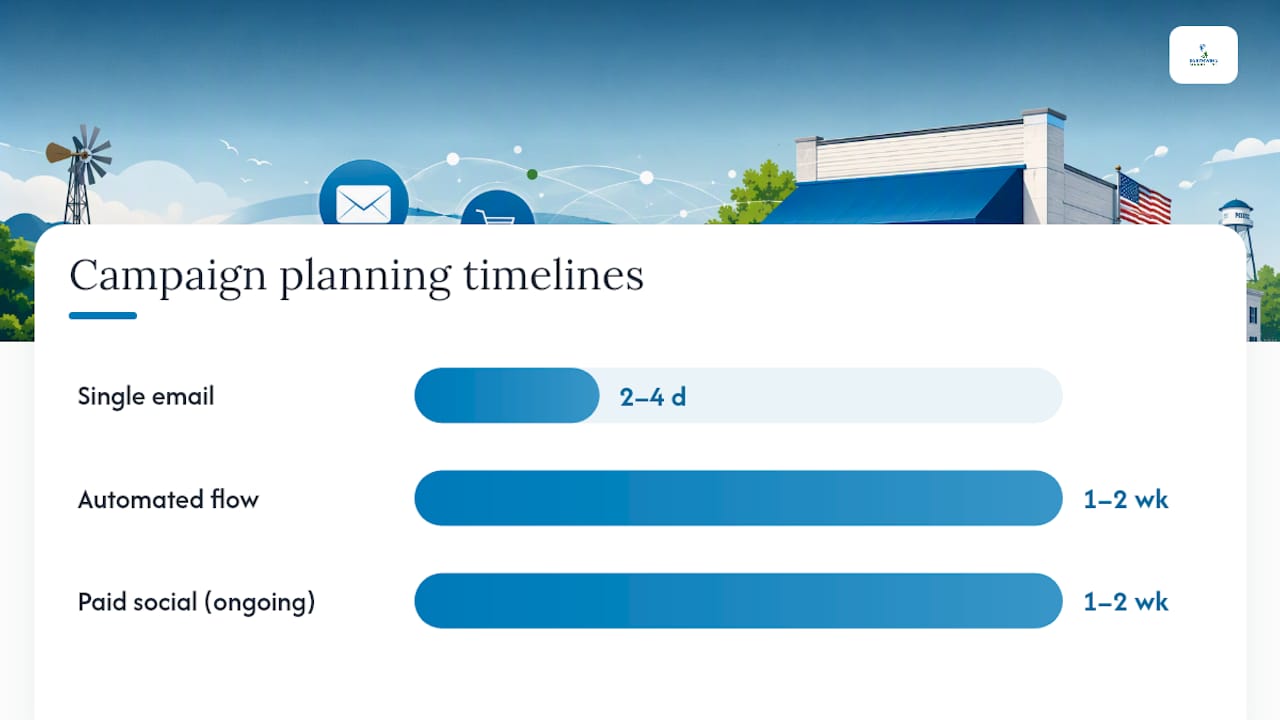
Social campaigns move on a different rhythm entirely. A single organic post can go live same-day, but a coordinated paid social campaign, including creative production, audience targeting, and budget testing, typically takes 1 to 2 weeks to plan properly and then requires ongoing daily or weekly monitoring to avoid wasted spend. Video content for platforms favoring short-form format often adds several more days for shooting and editing alone.
The operational difference is upkeep. Email automations are largely "build once, benefit repeatedly." Social campaigns demand continuous attention, fresh creative, and active budget management to keep performing, which is exactly why a lean team should weigh time cost as heavily as ad spend when deciding where to invest.
How Do Segmentation and Targeting Differ Between the Two Channels?
Email segmentation works off data you actually own: purchase history, browsing behavior on your site, email engagement, and lifecycle stage. That lets you send a completely different message to a first-time visitor than to a customer who buys every 60 days, and you can build those segments as granular as your data allows.
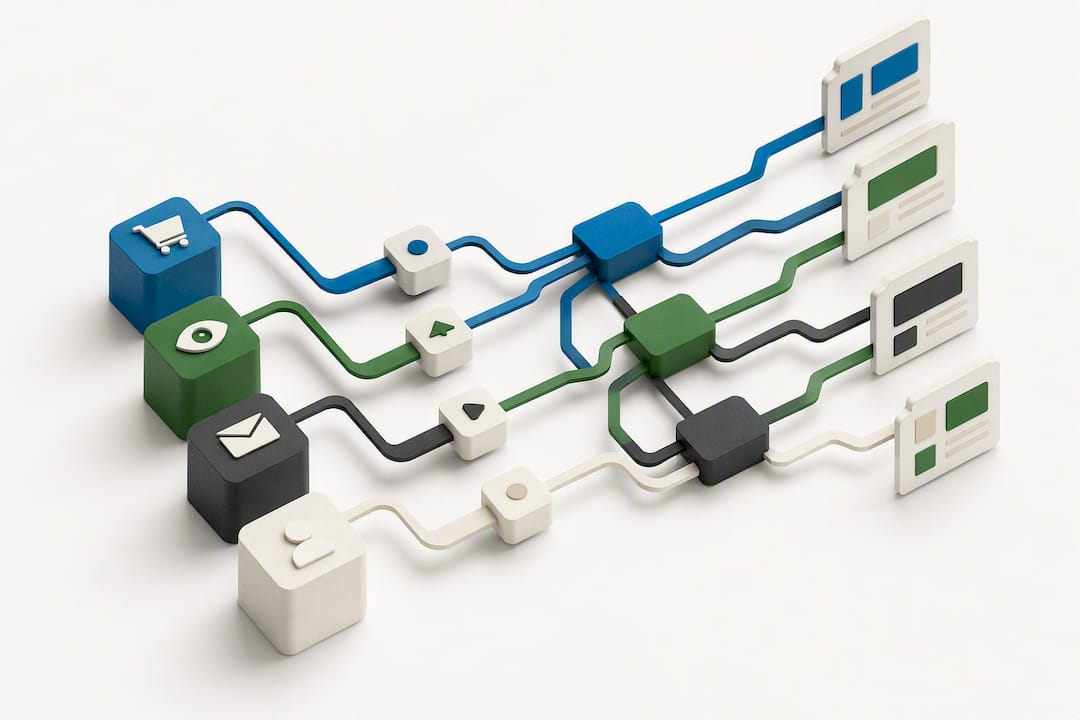
Social media targeting works off the platform's data about its users, not yours. You can target by interest, demographic, or lookalike audience modeled on your existing customers, but you're always working within the categories the platform gives you, and those targeting options have gotten more restricted as privacy regulations tightened data collection.
The personalization ceiling is different too. An email can address a subscriber by name, reference their last purchase, and recommend a specific replenishment product. A social ad, even a well-targeted one, is still a broadcast message shown to everyone in that audience segment simultaneously. This is the segmentation gap that makes email so effective for retention: it can speak to an individual, while social speaks to a category of people who resemble that individual.
Get the Sequencing Right Before You Scale Either Channel
The mistake I see most often isn't picking the wrong channel. It's picking a channel before checking whether the store even has the audience to support it. A rural boutique with 200 loyal repeat customers doesn't need a bigger social following first. It needs a welcome flow and a cart abandonment sequence, because the revenue is sitting right there in a list nobody built yet.
My one-line takeaway: build the list before you chase the feed. Test that sequencing over the next 30, 60, and 90 days and you'll see which channel actually earns more of your budget.
— Damien Denmark
How Southwind Marketing Helps You Build This Playbook
Getting the sequencing right takes more than good intentions. It takes a list-growth engine, working automations, and a website that actually captures the traffic your social ads and posts are already generating. That's the practical gap Southwind Marketing closes for ecommerce clients: we build the infrastructure that turns social discovery into owned email revenue, without the overhead of hiring a full marketing department.
Southwind Connect℠ is built for exactly this: CRM, automation, and multichannel communications that handle welcome flows, cart abandonment sequences, and segmentation without you touching a spreadsheet, starting at $97 a month on the Starter plan. Pair that with Southwind Signal℠ for SEO work that drives organic discovery feeding your email list, and Website Design for landing pages that actually convert social traffic into subscribers instead of losing them.
The practical next step is simple: get an audit of your current list, flows, and site conversion setup before you spend another dollar on social ads. Visit the Southwind Connect℠ services page to see plan details and request that audit.
Sources
- Social media advertising click-through rates (Statista)
- Email Marketing vs Social Media 2026: Which Drives More Revenue? (EmailSequenceAI)
FAQ
What Is the 3-3-3 Rule for Marketing?
There's no single agreed-upon definition of a "3-3-3 rule" specific to email or social marketing in ecommerce. Some marketers use it informally to describe testing three subject lines, three send times, or three audience segments, but treat it as a personal framework rather than an industry standard.
Can You Sell Ecommerce Products Through Email Marketing?
Yes, email marketing is one of the most direct sales channels available to ecommerce stores, with estimated returns of $36 to $42 for every $1 spent. Product launches, abandoned cart recovery, and replenishment reminders all convert directly through email without needing a third-party platform in between.
What Is the 80/20 Rule in Email Marketing?
The 80/20 rule in email marketing generally suggests that the majority of your content should provide value, education, or entertainment, while a smaller portion should be direct promotional asks. It's a guideline for keeping subscribers engaged rather than a strict formula every brand must follow.
Is Email Marketing Still Worth It in 2026?
Yes. Email consistently outperforms social media on measurable ROI, with open and click-through rates in North America still beating most social engagement metrics. Because you own the list, email also avoids the reach volatility that comes with social algorithm changes, making it the more reliable long-term revenue channel for ecommerce.
Does Southwind Marketing Help Set Up Email Automation for Ecommerce?
Yes, Southwind Marketing implements CRM and marketing automation, including welcome series and cart abandonment flows, through Southwind Connect℠, with plans starting at $97 a month. Current pricing and plan details are listed on the Southwind Connect℠ services page.