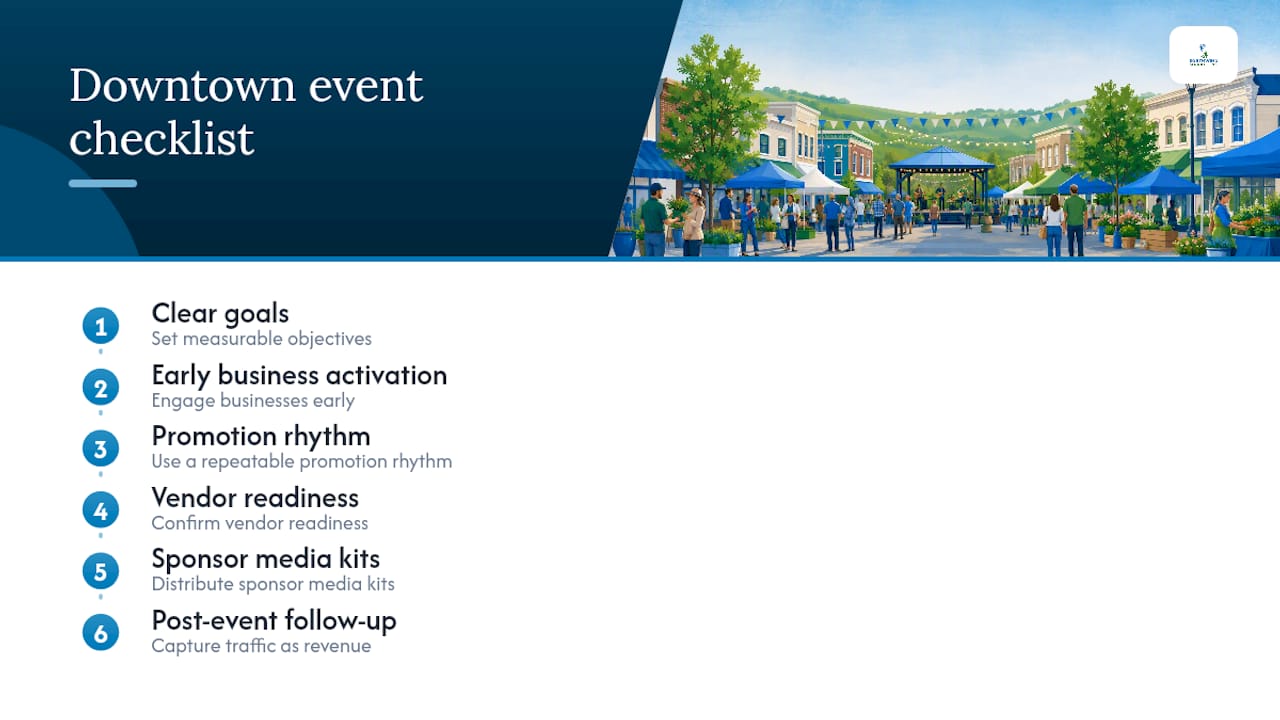
The single most effective downtown event marketing strategy is a coordinated, measurable mix of clear goals, early business activation, and a repeatable promotion rhythm, not a scramble of social posts the week before. Main Street America and Southwind Marketing both point to the same pattern: 78% of small towns report increased foot traffic during community events, but only the ones that plan sequentially capture that traffic as revenue. The six-step checklist below shows you how.
Key Takeaways
Downtown event marketing succeeds when clear goals, early business activation, and a measured post-event follow-up work together instead of separately.
| Point | Details |
|---|---|
| Set goals before tactics | Decide whether you're optimizing for attendance, vendor sales, or signups before choosing channels. |
| Activate businesses early | Brief vendors and sponsors 8 to 12 weeks out so they can staff and plan offers in advance. |
| Layer your channels | Combine social spotlights, email cadence, press pitches, and signage instead of relying on one channel. |
| Measure what matters | Track foot traffic, vendor sales lift, and return-visit rate, not just headcount. |
| Use Southwind Marketing tools | Southwind Signal℠, Southwind Connect℠, and Civic Intelligence℠ automate promotion, RSVP tracking, and post-event surveys. |
Table of Contents
- What Is the Best Approach to Downtown Event Marketing?
- Which Promotion Channels Actually Drive Attendance?
- How Far Ahead Should You Start Promoting?
- How Do You Measure a Downtown Event's Success?
- How Do You Get Local Businesses and Sponsors Involved?
- Why Community Trust Beats Clever Marketing Every Time
- Get Help Running Your Next Downtown Event Campaign
- Sources
- FAQ
What Is the Best Approach to Downtown Event Marketing?
Downtown event marketing works when you treat it as a system, not a series of announcements. That means setting goals before you pick a hashtag, briefing your merchants before you print a flyer, and building your measurement plan before the event ever happens. Skip any one of those and you get a crowd with no data behind it and businesses with no story to tell afterward.
Here's the sequence that holds up across small and mid-sized downtowns.
- Set goals and KPIs first. Decide whether you're chasing attendance, vendor sales, email signups, or repeat visits, because your promotional choices change depending on the answer. A festival built to fill storefronts needs different messaging than one built to grow a chamber's email list.
- Segment your audience and tailor messaging. Downtown regulars respond to different language than day-trippers or first-time visitors. Speak to locals about community pride and to visitors about what they can't get anywhere else.
- Activate partners and prep vendors early. This is the highest-leverage step for small teams. Businesses that know their role two months out staff up, stock inventory, and design offers; those that hear about it two days out just hang a banner.
- Build your content and distribution plan. Map out what publishes when, across which channels, so you're not writing captions the morning of the event.
- Prepare for day-of contingencies. Weather, permits, and crowd flow all need a plan B written down somewhere besides your head.
- Capture data and follow up after. Surveys, photos, and vendor sales numbers are worthless if nobody collects them before the crowd disperses.
Pro Tip: Set up your post-event survey and QR-code check-in before the event opens, not after. A tool like Civic Intelligence℠ can queue the survey link so it fires automatically to anyone who checks in through Southwind Connect℠, which means you're not chasing responses a week later when memories have faded.
Which Promotion Channels Actually Drive Attendance?
Every downtown has a favorite channel. The mistake is picking one and ignoring the rest. A repeatable distribution approach that layers content across a preview, spotlight, and recap arc consistently outperforms one-off posts, and it costs nothing extra to plan that way from the start.
Here's what works channel by channel:
- Social media: Create one event hashtag and stick to it across every post. Run a "vendor spotlight" series in the two weeks leading up to the event, one merchant per day, so partners share their own feature and multiply your reach for free.
- Email: Send a save-the-date at 8 weeks, a details email at 3 weeks, and a reminder 48 hours out. Three touches beat one blast.
- Local press and radio: Pitch your local paper or radio station a human angle, not just an event listing. A merchant's backstory gets airtime a flyer never will.
- Google and listings: Add proper event markup to your website so Google surfaces your event in local search and Maps, not just your own social feed.
- Physical signage: Sidewalk signs and QR-coded parking maps keep foot traffic moving toward vendors instead of stalling at the entrance.
- Partner networks and ambassadors: Recruit a handful of engaged residents or business owners as ambassadors and give them the same assets your sponsors get.
None of this requires a large budget. A phone camera, a shared drive of assets, and a consistent cadence outperform expensive production every time.
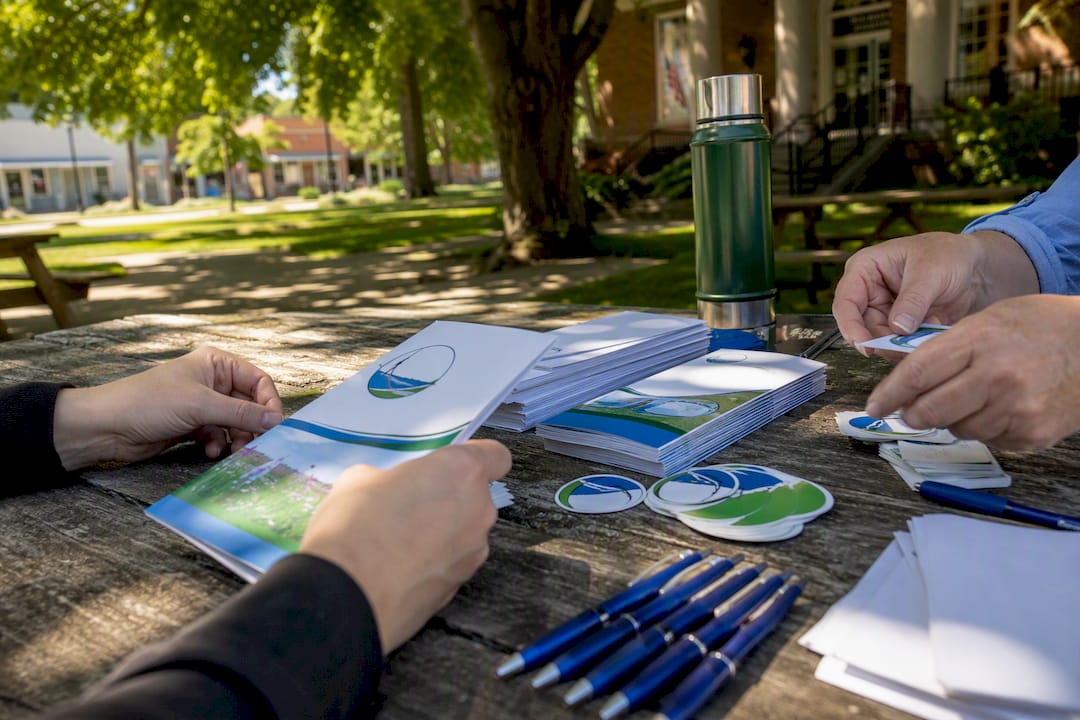
Pro Tip: Build one media kit, a folder with your logo, three ready-made social captions, a press blurb, and two photos, and send it to every partner and sponsor at once. Cohesive marketing materials mean your sponsors actually post instead of forgetting. Southwind Signal℠ can automate that distribution and even generate the event page content so your team isn't rewriting the same copy five times.
How Far Ahead Should You Start Promoting?
Marketing timelines that start 8 to 12 weeks out and ramp to daily promotion in the final week consistently outperform last-minute pushes, mainly because merchants need lead time to plan staffing and event-only offers.
| Timeframe | Core actions |
|---|---|
| 10 to 12 weeks out | Publish the event page, confirm vendors, lock sponsorship tiers |
| 6 to 8 weeks out | Start partner outreach, send save-the-date email, brief local press |
| 3 to 4 weeks out | Launch boosted social posts, distribute media kits to sponsors |
| 1 to 2 weeks out | Daily vendor spotlights, confirm signage and volunteer roles |
| Day of | Execute contingency plan, staff check-in stations, capture photo and survey data |
- Recurring annual events can compress the early outreach window since vendors already know the drill.
- One-off or first-year events need the full 12 weeks because you're building trust with partners from scratch.
- Lock your vendor list no later than 4 weeks out. Waiting longer creates chaos in signage and program printing.
How Do You Measure a Downtown Event's Success?
Attendance alone tells you almost nothing about whether an event worked. The real signal comes from vendor sales lift, return visits, and foot traffic patterns you can compare year over year.
Priority KPIs to track:
- Total attendance and peak-hour timing
- Foot-traffic counts, whether from sensors or manual clicker counts at key corners
- Vendor sales lift compared to a normal weekend
- Email and text signups collected on-site
- Social impressions and engagement on your event hashtag
- Return-visit rate in the weeks following the event
Economic-impact studies of local festivals help Main Street programs turn a good feeling into a fundable case. Simple tools do most of the work here: a QR-code check-in tied to a short survey, a POS-based vendor questionnaire asking about sales compared to a typical day, and a manual or sensor-based foot-traffic count at your busiest intersection.
Two Mississippi Main Street communities used post-event surveys to document exactly this kind of economic-impact data, turning a single festival weekend into evidence they could bring to city council and grant applications for the following year's budget.
Statistic to remember: attendees at successful downtown festivals are about 2.5 times more likely to return to a business they discovered at the event, which is the strongest argument for collecting contact information on-site rather than treating the crowd as a one-time audience. Civic Intelligence℠ is built to run exactly this kind of resident and stakeholder survey, feeding results straight into an economic-impact report instead of a spreadsheet nobody opens again.
How Do You Get Local Businesses and Sponsors Involved?
Sponsorship works best in tiers with clear deliverables attached, not a vague "thank you for supporting us" arrangement. An entry-level sponsor might get logo placement and a social shoutout; a featured sponsor gets a booth and inclusion in every email; a title sponsor gets stage signage, a speaking slot, and top billing across the media kit. A partner directory like Southerncalifornia shows how clearly scoped tiers keep both sides aligned on expectations.
Business activation checklist:
- Be open and fully staffed during event hours.
- Create an event-only offer or discount tied to the day.
- Put something in the window, sampling, a display, anything that signals participation.
- Run a "passport" program that rewards visitors for stopping at multiple storefronts.
- Brief staff ahead of time so they know the offer and can talk about it.
Collaboration between businesses, nonprofits, and artists expands your reach without expanding your budget. Keep signage and hashtags consistent across every partner so the downtown branding stays cohesive instead of cluttered. Southwind Signal℠ and Southwind Connect℠ both help coordinate that distribution so partners aren't juggling five different sets of instructions.
Why Community Trust Beats Clever Marketing Every Time
The event marketing advice that circulates online tends to focus on hashtags and boosted posts, and both matter, but they're not what makes a downtown event actually work. What makes it work is whether the businesses on that block trust you enough to stay open, staff up, and hand out flyers themselves. That trust gets built months before the event, not during the promotion window. Communities that treat vendor readiness and survey data as core marketing tasks, not afterthoughts, consistently outperform towns that spend more on ads. Southwind Marketing's work with rural Main Street programs backs this up. Civic Intelligence℠ exists because the data you collect from residents after an event often matters more for next year's funding than the turnout itself.
Get Help Running Your Next Downtown Event Campaign
Southwind Marketing is the alternative to hiring a big-city agency for downtown event marketing, built specifically for Main Street budgets and small-town teams stretched across a dozen responsibilities. Instead of a generic campaign template, you get tools built around exactly what this guide covers: Southwind Signal℠ automates your event page and content distribution so your team isn't retyping the same announcement five times, Southwind Connect℠ handles CRM-based RSVP drives and mass alerts for day-of reminders, Southwind Guardian℠ keeps your event pages online and fast during your highest-traffic weekend of the year, and Civic Intelligence℠ runs the resident surveys that turn your attendance numbers into an economic-impact report city council will actually fund next time.
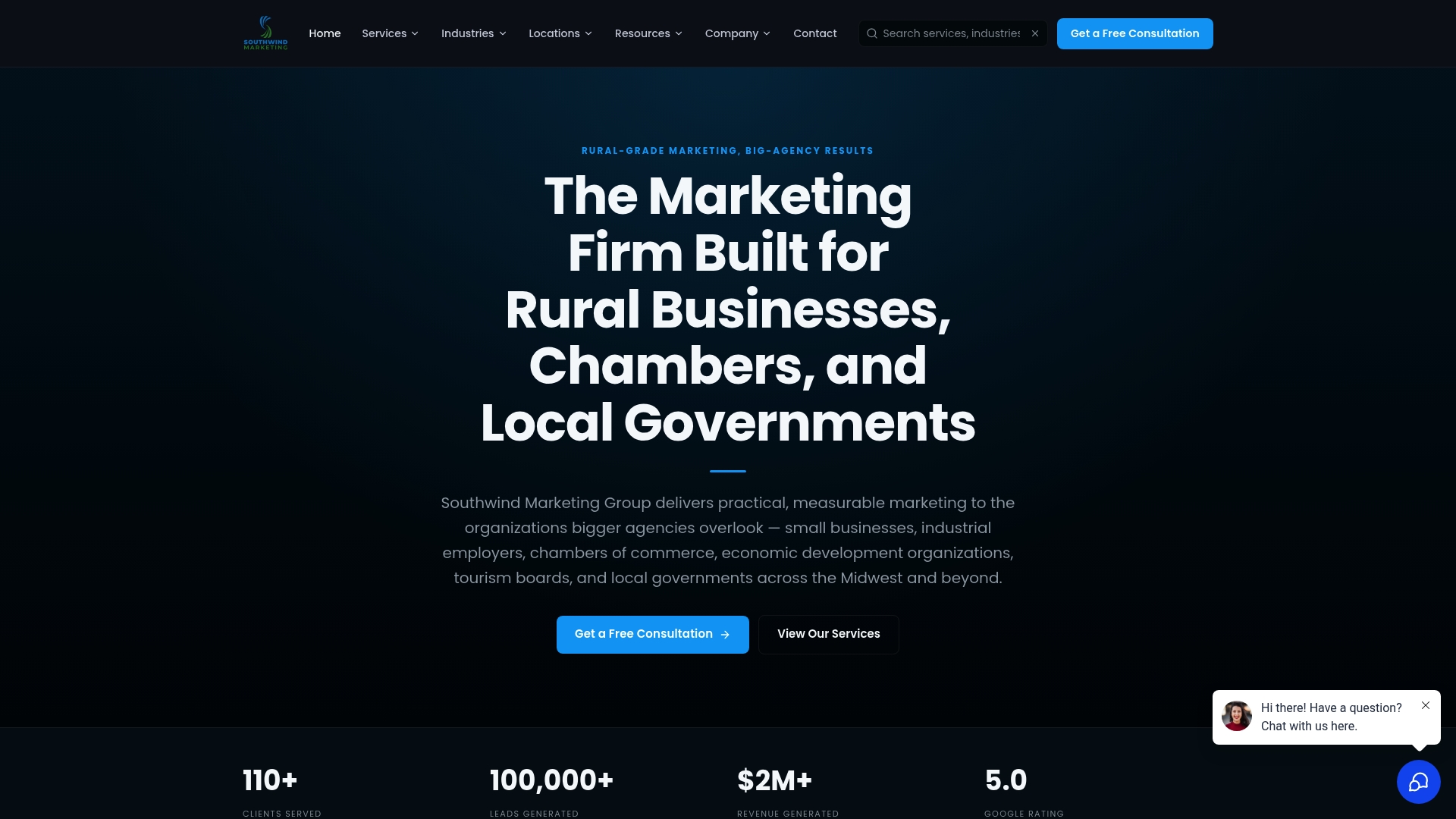
Southwind Marketing helped drive 14,000 attendees to the Liberal Air Fair using this exact data-driven approach, and downtown development authorities across Oklahoma, Kansas, and Texas use the same playbook for smaller Main Street festivals. If you're planning a downtown event and want a second set of eyes on your promotion timeline and website readiness, start with a free 10-minute visibility audit or explore Downtown Development Authority marketing support to see how a coordinated campaign comes together.
Sources
These sources informed the strategies in this guide and are worth bookmarking for deeper research:
- Measuring the Economic Impact of Special Events
- Best Practices for Quality Downtown Event Programming | DNJ
- Effective Event Promotion for Chambers of Commerce, Main Streets or Downtowns, and More
- Downtowns Don’t Market Themselves: The Work Behind Great Main Streets - Location Georgia
Civic Intelligence℠ and Southwind Marketing's downtown-focused services can put these methods into practice for your next event.
FAQ
What Is Downtown Event Marketing?
Downtown event marketing is the coordinated promotion of a local event, festival, or gathering across digital and physical channels to drive attendance, foot traffic, and measurable spending at nearby businesses.
How Far in Advance Should I Start Promoting a Downtown Event?
Start 8 to 12 weeks out for first-time or larger events, giving vendors and sponsors enough lead time to plan staffing and offers, then ramp to daily promotion in the final week.
What KPIs Should I Track for a Downtown Event?
Track total attendance, foot-traffic counts, vendor sales lift, email or text signups, social engagement, and return-visit rate in the weeks after the event.
How Do I Get Local Businesses to Participate in an Event?
Brief them early with a clear activation checklist, staying open, creating event-only offers, staffing up, and displaying signage, and give them ready-made marketing assets so they can promote the event themselves.
Can Southwind Marketing Help With Downtown Event Promotion?
Yes. Southwind Marketing supports downtown and Main Street events with Southwind Signal℠ for content automation, Southwind Connect℠ for RSVP and alert campaigns, and Civic Intelligence℠ for post-event surveys that feed economic-impact reporting.