
Community sponsorship marketing is defined as a strategic channel that transforms brand placements into active, mutually beneficial partnerships between organizations and their communities. This guide covers the full framework: from building a sponsor-centric deck to measuring ROI after activation. The industry has moved decisively away from passive logo displays. Sponsors now expect measurable outcomes, tiered benefit packages, and at least a 6-month commitment before they see meaningful brand recognition. Southwind Marketing works with rural businesses, chambers of commerce, and local governments to build exactly these kinds of results-driven sponsorship programs.
What are the essential elements of a community sponsorship marketing strategy?
Sustainable sponsorship programs are built on partnerships, not transactions. A one-off event deal rarely produces the brand recognition or community trust that sponsors expect. Industry standards now require a minimum 6-month commitment to allow enough time for brand integration and measurable activation. That timeline gives both parties room to build familiarity, adjust tactics, and demonstrate real value.
Your sponsorship deck is the first test of whether a potential partner takes you seriously. Effective decks run 10–15 slides and lead with audience demographics, tiered packages, and clear ROI metrics. The most common failure is building a community-centric deck that explains what the sponsorship means to your organization. Decision-makers want to know what is in it for them on every slide.

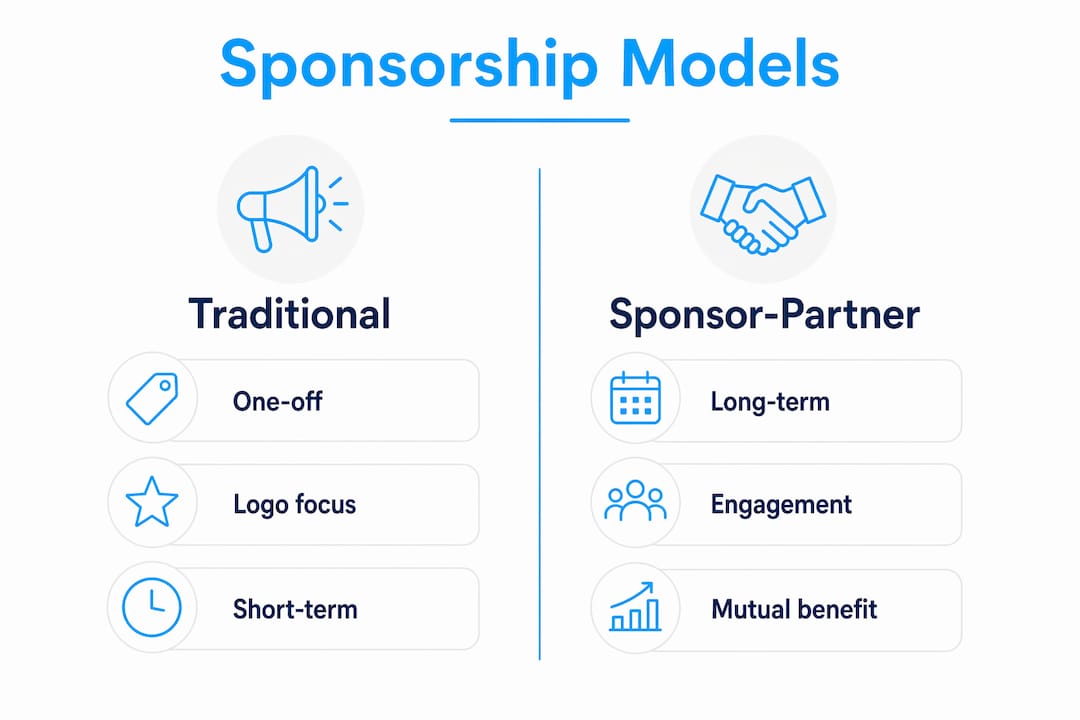
The table below shows how traditional sponsorships differ from the sponsor-partner model that produces lasting results.
| Element | Traditional sponsorship | Sponsor-partner model |
|---|---|---|
| Commitment length | Single event or season | Minimum 6 months |
| Deck focus | Community benefits | Sponsor ROI and audience fit |
| Benefit structure | One flat package | 3–4 tiered packages |
| Activation | Logo placement | Interactive brand experiences |
| Feedback | None or informal | Structured post-event reporting |
Tiered packages give sponsors a clear path to choose their level of involvement. A bronze tier might include logo placement and social mentions, while a gold tier adds speaking opportunities, branded content, and direct lead capture. Structuring packages this way lets you serve sponsors with different budgets while keeping your program financially sustainable.
Pro Tip: Before you pitch any sponsor, confirm that their target customer matches your community’s demographics. A misaligned sponsor will underperform and is unlikely to renew.
Sponsorship works best as an advanced revenue model after community trust and maturity are already established. Rushing into sponsorship sales before your audience is engaged can erode credibility with both sponsors and community members.
How do you identify and engage the right sponsors for your community?
Matching the right sponsor to your community is the single most important decision in the process. A sponsor whose products or values conflict with your audience will generate friction, not goodwill. Audience analysis is the starting point: know your community’s age range, income levels, interests, and purchasing behavior before you approach any brand.
Data-driven outreach uses surveys, focus groups, and ongoing feedback loops to align sponsorships with real community needs. This is not a one-time exercise. Gathering input before, during, and after each sponsorship cycle gives you the evidence sponsors need to justify renewal. It also shows community members that their preferences shape the program.
Common community sponsorship contexts where this matching process works well include:
Local festivals and fairs. Sponsors in food, beverage, and retail align naturally with high-attendance outdoor events. Their products are visible and relevant in the moment.
Youth sports programs. Local banks, insurance agencies, and family-oriented businesses consistently perform well here. The audience is parents with purchasing power and strong community loyalty.
Chamber of commerce events. B2B sponsors, professional services firms, and regional employers find direct access to decision-makers at these gatherings.
Tourism and cultural events. Hospitality brands, regional attractions, and travel-related businesses gain exposure to visitors who are actively spending.
Economic development initiatives. Sponsors in construction, real estate, and workforce development align with community growth narratives and government-backed programs.
Transparency with sponsors and community members is not optional. Share your audience data openly. Explain how you selected sponsors and why their presence benefits the community. When sponsors see that you communicate clearly with your audience, they trust that their brand is in good hands.
Pro Tip: Integrate sponsorship activation into existing community programs naturally. A sponsor who fits into a program already trusted by residents will generate far more goodwill than one who feels inserted.
What are best practices for activating sponsorships to maximize engagement and ROI?
Sponsorship activation is the process of turning a brand’s presence into a direct experience for community members. Activation shifts sponsorship from passive logo display to interactive engagement that builds loyalty. A banner on a fence is visibility. A sponsor-hosted cooking demonstration at a local festival is activation. The difference in recall and goodwill is significant.
Layered exposure across multiple channels builds faster and stronger brand familiarity than any single touchpoint. Integrating your sponsorship with SEO, online reviews, and direct mail creates a consistent presence that compounds over time. A sponsor who appears at your event, in your email newsletter, and in local search results is far more memorable than one who shows up only on event day.
Proven activation tactics used in successful community sponsorship campaigns include:
Interactive experiences. Branded games, product sampling stations, and live demonstrations give attendees a reason to engage directly with the sponsor.
Content creation partnerships. Sponsors co-create blog posts, social media content, or video features that reach audiences before and after the event.
Direct engagement opportunities. Q&A sessions, meet-and-greet formats, and sponsor-led workshops position the brand as a community resource, not just a logo.
Digital amplification. Event hashtags, tagged social posts, and sponsor-specific landing pages extend reach beyond the physical event.
Cause-linked activations. Tying a sponsor’s presence to a community cause, such as a food drive or scholarship fund, generates earned media and emotional connection.
Closing the feedback loop after every activation is what separates programs that renew from those that do not. Sharing event results and showing sponsors how their input shaped outcomes builds the kind of trust that leads to multi-year commitments.
Pro Tip: Send sponsors a one-page post-event summary within two weeks of the event. Include attendance numbers, social reach, and any direct leads generated. Sponsors who see clear results renew at much higher rates.
How do you measure success and maintain sustainable sponsorship relationships?
Measuring sponsorship success requires defining your KPIs before the program launches, not after. The most useful metrics fall into three categories: brand recognition (aided and unaided recall surveys), engagement (social interactions, booth traffic, content views), and direct leads (email sign-ups, coupon redemptions, sales attributed to the event). Each metric tells a different part of the story, and sponsors need all three to justify continued investment.
Post-event feedback is the mechanism that keeps relationships alive. Summarizing community input and demonstrating how it was incorporated into the program shows sponsors and community members that their voices matter. This practice also gives you documented evidence of program improvement over time, which is a powerful renewal argument.
Pricing your sponsorship packages correctly is as important as activating them well. Two models dominate the field:
| Pricing model | How it works | Best for |
|---|---|---|
| Value-based pricing | Price reflects audience size, demographics, and activation quality | Established programs with proven ROI data |
| Cost-driven pricing | Price covers production costs plus a margin | New programs building their first sponsor base |
Avoid these common mistakes that undermine long-term sponsorship relationships:
Accepting sponsors whose values conflict with your community’s identity.
Offering only one flat package with no room for sponsors to scale up.
Skipping post-event reporting, which leaves sponsors without evidence of value.
Pursuing sponsorship before your audience is large and engaged enough to deliver results.
The most durable sponsorship programs treat renewal as a process, not an event. Check in with sponsors quarterly, share interim data, and ask what they need before the next cycle begins.
Key takeaways
Effective community sponsorship marketing requires sponsor-centric planning, data-driven outreach, and consistent post-event reporting to build partnerships that renew year after year.
| Point | Details |
|---|---|
| Commit to minimum 6 months | Short commitments prevent brand recognition; industry standard is at least 6 months per partnership. |
| Build sponsor-centric decks | Every slide must answer “What’s in it for them?” to win decision-maker buy-in. |
| Use data-driven outreach | Surveys and focus groups align sponsors with real community needs and strengthen renewal arguments. |
| Activate beyond logo placement | Interactive experiences and multichannel integration produce measurable ROI that passive placements cannot. |
| Close the feedback loop | Post-event summaries shared within two weeks build trust and drive higher renewal rates. |
What I’ve learned about community sponsorship that most guides skip
Most sponsorship guides focus on the pitch. The real work happens after the contract is signed. I’ve seen well-funded programs collapse because the sponsor felt invisible between events and the community felt like the relationship was purely commercial. Both groups need to feel the partnership is genuine.
The shift toward activation is real and accelerating. Sponsors in 2026 are not satisfied with a logo on a banner. They want documented proof that their brand reached real people and produced measurable outcomes. That expectation is not unreasonable. It is actually good for community programs because it forces organizers to build better events.
The most underrated practice in this field is the quarterly check-in. Most organizations contact sponsors only when they need something: a renewal signature or a check. Sponsors who hear from you with positive updates between cycles are far more likely to increase their investment. Treat them like partners, not ATMs.
One more thing worth saying directly: sponsorship is not a first-step revenue model. If your community program is still building its audience, focus on engagement first. Premature sponsorship pitches signal desperation and can permanently damage your credibility with local business leaders. Build the audience. Then sell the access.
— Southwind Marketing
How Southwind Marketing supports your sponsorship marketing efforts
Southwind Marketing works specifically with rural businesses, chambers of commerce, and local governments that need practical sponsorship and outreach strategies, not generic agency playbooks. The team has generated over 100,000 leads and $2M in revenue for communities that larger agencies routinely overlook. Services include community marketing strategy, branding, website design, tourism marketing, and economic development planning. If you are building a sponsorship program from the ground up or trying to improve renewal rates on an existing one, Southwind Marketing brings the local market knowledge and measurable results that make the difference. Reach out to see how the team can support your next initiative.
FAQ
What is community sponsorship marketing?
Community sponsorship marketing is a structured approach where brands invest in local programs, events, or organizations in exchange for audience access and brand exposure. It differs from traditional advertising because it builds trust through community association rather than direct promotion.
How long should a community sponsorship commitment last?
The industry standard is a minimum 6-month commitment. Shorter commitments do not allow enough time for brand recognition to develop or for activation strategies to produce measurable results.
What should a sponsorship deck include?
A sponsorship deck should run 10–15 slides and focus on sponsor benefits, audience demographics, tiered packages, and ROI metrics. Every slide should answer the question “What does the sponsor gain?” rather than explaining the community’s needs.
How do you measure the ROI of a community sponsorship?
Track brand recognition through recall surveys, engagement through social interactions and booth traffic, and direct leads through email sign-ups or coupon redemptions. Share these results with sponsors within two weeks of each event.
When is the right time to launch a sponsorship program?
Launch a sponsorship program only after your community audience is established and actively engaged. Pursuing sponsors before your audience is ready signals low value and can damage relationships with local business leaders.