
TL;DR:
- Economic development is a relationship discipline that focuses on building trust before closing deals. Trust and honest communication with residents, property owners, and developers lead to sustainable growth and long-term partnerships.
Economic development is a relationship discipline, not a deal-closing function. Damien Denmark, a marketing strategist and economic development communications expert, makes this case plainly: the communities that grow sustainably are the ones that build trust first and close deals second. That means honest conversations with property owners, developers, and residents long before a project is on the table. It means policy frameworks built before external pressure arrives. And it means treating residents as stakeholders in growth, not bystanders watching it happen. Southwind Marketing works with rural economic developers who understand this distinction and need the marketing infrastructure to act on it.
Who Is Damien Denmark and Why His Approach Matters
Damien Denmark is a marketing strategist and economic development communications expert whose thinking centers on one core claim: trust precedes transactions in every meaningful economic development outcome. His work, including insights shared on Episode 226 of the Econ Dev Show podcast, reframes how chamber directors and EDO staff should think about their role. The job is not to sell a community. The job is to represent it honestly and build relationships that hold up under pressure.
This reframing matters because the standard playbook for economic development leans heavily on promotion. Communities highlight their assets, minimize their challenges, and hope a developer bites. Denmark's approach flips that. He argues that honest representation of a community's real profile, including its gaps, builds more loyal and durable engagement than polished marketing alone. Developers and employers who feel they received an accurate picture become long-term partners. Those who feel oversold become cautionary tales.
The Damien Denmark biography that matters most to economic development professionals is not a list of credentials. It is a framework: relationships first, policy second, marketing third. Each layer supports the next. Without trust, policy has no community backing. Without policy, marketing has no substance to communicate.
Why economic development is a relationship game, not a deal game
The most common mistake economic developers make is treating every interaction as a pitch. Property owners, business prospects, and community leaders all recognize a pitch. What they respond to is a relationship built over time, with consistent follow-through and honest communication.
"Economic development demands honesty about a community's unique profile and balancing optimism with market realities to build loyal community engagement. Relationship-based approaches balance community loyalty with hard negotiation for sustainable growth."
This insight from Denmark's podcast appearance captures the tension every EDO professional feels. You want to promote your community. You also need to be credible. The resolution is not to choose one over the other. It is to lead with accuracy and let the relationship carry the optimism.
Relationships also solve problems that deals cannot. When a developer hits a zoning issue or a property owner gets cold feet, the economic developer with an established relationship has options. They can call in favors, broker conversations, and find creative paths forward. The economic developer who only shows up at closing has none of those tools.
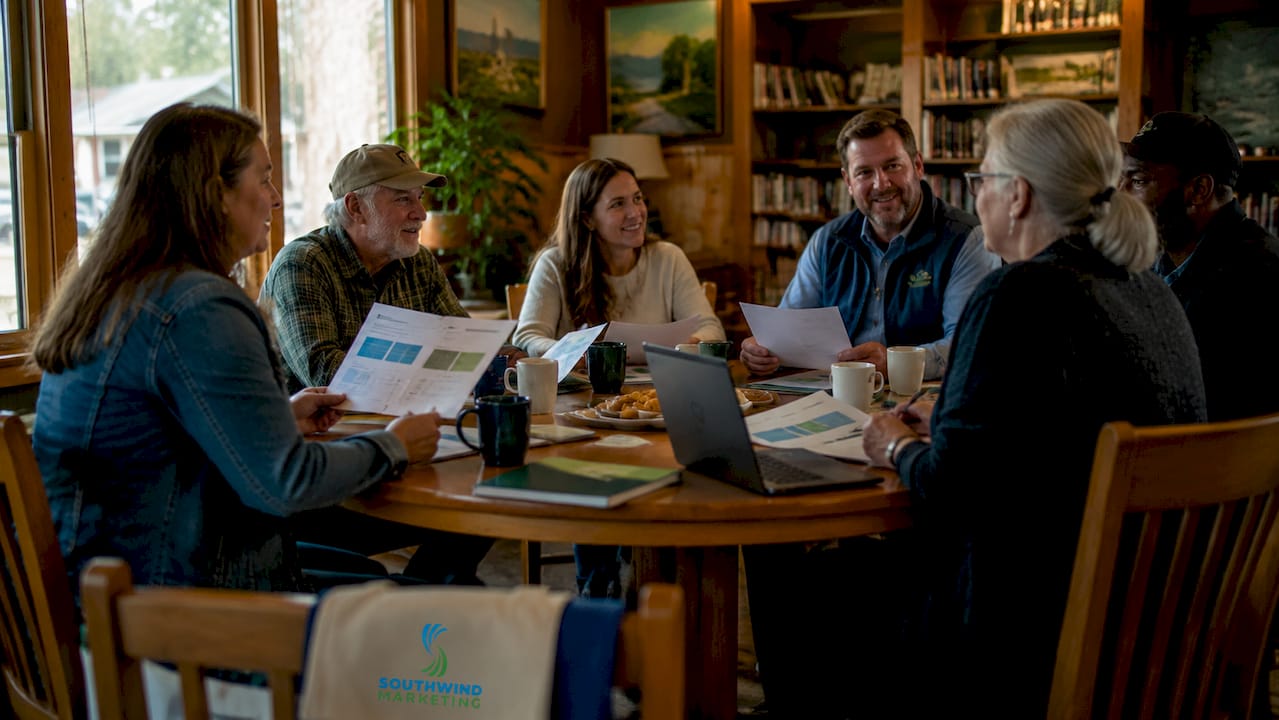
Residents are the most overlooked relationship in this equation. When communities treat residents as bystanders, growth feels imposed rather than shared. That produces resistance, political friction, and projects that stall. When residents are engaged early and honestly, they become advocates. They show up at public meetings, they spread the word, and they take pride in outcomes they helped shape.
Pro Tip: Start relationship-building with your top 10 property owners and your top 10 employers before you have a prospect in hand. Those conversations will be your most valuable asset when a real opportunity arrives.
- Build relationships with property owners before a prospect asks about a site
- Engage employers on workforce challenges before those challenges become crises
- Involve residents in visioning before a project is announced
- Communicate honestly about community gaps, not just community strengths
- Follow up consistently, even when there is nothing to report
How intentional policy frameworks create sustainable growth
Policy frameworks are the infrastructure of economic development. They define what a community is willing to offer, what it expects in return, and how it will measure success. Communities that build these frameworks before pressure arrives make better decisions than those that improvise under deadline.
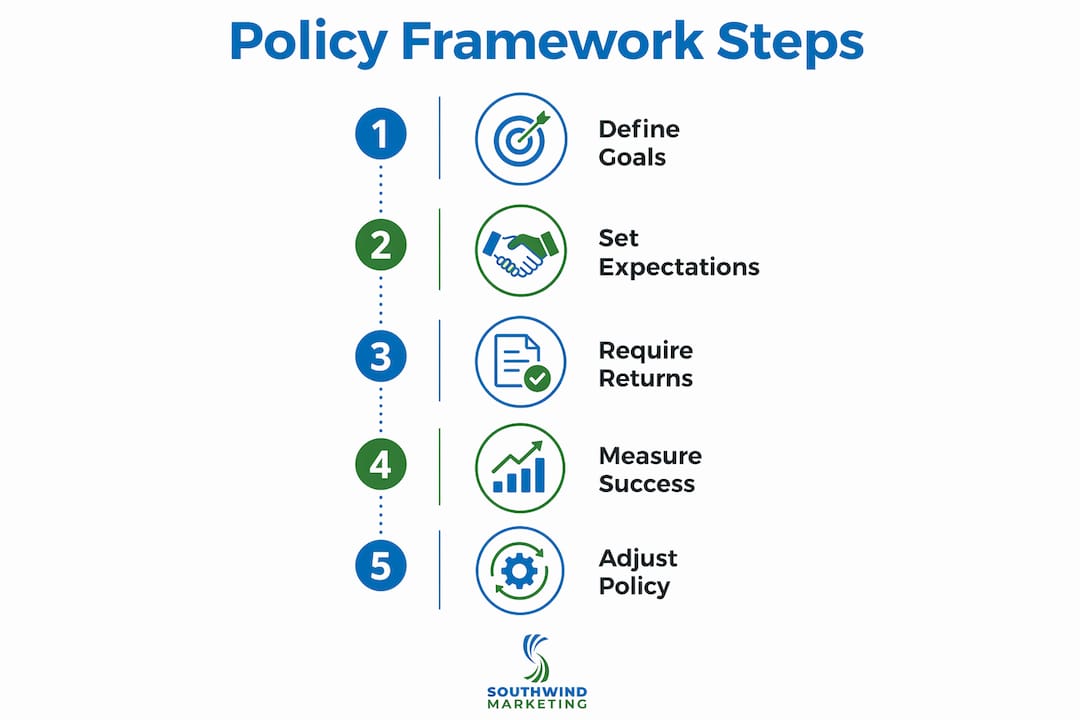
Denmark's perspective on incentive structures is direct: incentives should require something real in return. Not just a job count. Real commitments, like public art installations, local vendor partnerships, service agreements with community organizations, and workforce development commitments. These requirements turn a tax incentive into a community investment. They also give residents a concrete reason to support a project.
Cross-sector leadership is the mechanism that makes policy frameworks work in practice. When downtown revitalization leaders, retail recruitment staff, and city growth policy teams operate in alignment, their efforts reinforce each other. When they operate in silos, incentives conflict, messaging contradicts, and developers get confused signals.
Here is a practical sequence for building a policy framework before external pressure arrives:
- Define your community's non-negotiables. What does every incentive recipient owe the community? Set this in writing before any prospect arrives.
- Identify your priority sectors. Which industries align with your workforce, your infrastructure, and your long-term vision? Focus your outreach there.
- Build your incentive menu. Know what you can offer, what requires council approval, and what the timeline looks like for each option.
- Establish community partnership requirements. Require recipients to engage with local suppliers, nonprofits, or workforce programs as a condition of incentive receipt.
- Create a review process. Set milestones and accountability checkpoints so the community can verify that commitments are being met.
Pro Tip: Write your incentive policy as if a skeptical resident will read it at a public meeting. If you cannot defend every line, revise it before a prospect ever sees it.
The table below compares two approaches to incentive policy design:
| Approach | Focus | Community Outcome |
|---|---|---|
| Reactive incentive policy | Closing the deal in front of you | Short-term wins, weak community buy-in |
| Proactive framework policy | Defining value before pressure arrives | Durable partnerships, resident support |
How disciplined marketing supports economic development relationships
Marketing is not the first step in economic development. It is the system that makes every other step visible, credible, and repeatable. Southwind Marketing's approach to rural economic development marketing treats messaging as infrastructure, not a one-off campaign.
Rural communities have historically lacked access to the data analytics and systems-building that national brands use to maintain consistent market positioning. That gap is a competitive disadvantage when a site selector is comparing your community to a larger metro. Closing that gap requires deploying sophisticated marketing strategies at the local level, including data dashboards, clear messaging frameworks, and digital presence that works across Google, ChatGPT, and Perplexity.
Disciplined marketing infrastructure is a key differentiator for rural economic development. Communities that invest in consistent, data-driven messaging attract more serious prospects and retain more employers than those that rely on word of mouth and occasional press releases. The difference is not budget. It is discipline.
Workforce initiatives illustrate this point clearly. Employer HR Roundtables, which connect local businesses to collaborate on recruitment, retention, and regulatory compliance, are a direct product of proactive relationship-building. They also generate marketing content: success stories, employer testimonials, and workforce data that make a community's pitch to new employers far more credible.
- Use data dashboards to track retail leakage, workforce trends, and site selector inquiries
- Build a consistent digital presence across search engines and AI platforms
- Create employer-facing content that reflects real workforce conditions, not aspirational claims
- Document relationship-building outcomes, like roundtable participation, as proof points for prospects
- Treat every marketing asset as part of a system, not a standalone project
Analytics-driven marketing produces measurably better outcomes for communities that commit to it as a practice rather than a project. The communities that win the long game are the ones that build marketing systems, not marketing moments.
Practical guidance for building community trust and shared pride
Trust and community pride, not buildings or deals, are what ultimately build successful communities. That claim sounds simple. Acting on it requires specific leadership practices that most economic development programs do not formalize.
The first practice is creating ongoing platforms for employer and resident engagement. A single town hall is not a relationship. A quarterly employer roundtable, a resident survey program, and a consistent communication channel are relationships. Proactive employer engagement prevents workforce challenges from becoming economic threats by surfacing problems early, when solutions are still available.
The second practice is framing residents as partners in growth, not audiences for announcements. This means sharing real information about what a project will cost, what it will require, and what the community will gain. Residents who receive honest information become advocates. Residents who feel managed become opponents.
Pro Tip: Use a resident survey program built on the Importance-Satisfaction methodology, like Southwind Marketing's Civic Intelligence℠, to identify what residents actually value before you build your economic development narrative around assumptions.
- Host quarterly employer roundtables to surface workforce and regulatory challenges early
- Conduct annual resident surveys to track satisfaction and identify priority concerns
- Share project timelines and trade-offs publicly, not just outcomes
- Recognize community contributors publicly to reinforce shared ownership
- Align your economic development narrative with what residents say they value, not just what you want to promote
Audience engagement strategies that prioritize two-way communication produce stronger community buy-in than broadcast-only approaches. The economic developers who master this practice build communities that attract growth because residents want it, not just because incentives are available.
Key Takeaways
Economic development succeeds when trust, honest communication, and disciplined policy frameworks replace reactive deal-making as the foundation of community growth.
| Point | Details |
|---|---|
| Relationships precede deals | Build connections with property owners and employers before any prospect arrives. |
| Policy frameworks prevent bad decisions | Define incentive requirements and community expectations before external pressure forces your hand. |
| Honest representation builds loyalty | Accurate community profiles attract durable partners; overselling produces short-term wins and long-term problems. |
| Marketing is infrastructure, not a campaign | Consistent, data-driven messaging systems outperform one-off promotional efforts in rural markets. |
| Residents are stakeholders, not bystanders | Engaging residents early and honestly produces advocates, not opponents, for community growth. |
Why buildings alone will never build a community
I have spent years working at the intersection of marketing and economic development, and the lesson that keeps proving itself is this: the communities that grow with pride are the ones that treated their residents as partners from the start. Not after the ribbon cutting. Not after the incentive was approved. From the start.
The temptation in economic development is to measure success by what gets built. Square footage. Job counts. Tax base. Those numbers matter. But they do not tell you whether a community trusts its leadership, whether residents feel ownership over the growth happening around them, or whether the relationships built during a project will survive the next one. Those are the metrics that predict long-term success, and they are almost never tracked.
What I have found is that transparent communication is not a soft skill. It is a competitive advantage. Communities that tell the truth about their challenges attract partners who are prepared for reality. Communities that oversell attract partners who leave when reality arrives. The economic development marketing work that Southwind Marketing does is built on this premise. We help communities tell their real story, clearly and consistently, across every channel where a site selector or employer might be looking.
The practical recommendation I offer every chamber director and EDO professional I work with is simple: start your next project by asking what your residents want, not what you want to announce. The answer will shape a better project and a more durable community.
— Damien Denmark
How Southwind Marketing supports economic development teams
Economic development professionals need more than a website. They need a marketing system that works before a prospect calls, during a project, and after a ribbon cutting.
Southwind Marketing builds that system for rural communities, chambers of commerce, and economic development organizations across Oklahoma, Kansas, Texas, Iowa, Missouri, and Arkansas. From economic development marketing and community branding to website design built for EDOs and local governments, every service is designed to create consistent, credible positioning that outlasts any single project. If your community is ready to build marketing infrastructure that supports real relationships and real growth, Southwind Marketing is the partner built for that work.
FAQ
Who is Damien Denmark?
Damien Denmark is a marketing strategist and economic development communications expert known for his people-first approach to community growth. His core argument, shared on Episode 226 of the Econ Dev Show, is that economic development is a relationship discipline, not a deal-closing function.
What does "economic development as a relationship game" mean?
It means that trust, honest communication, and long-term stakeholder engagement produce more durable growth than transactional deal-making. Communities that build relationships before prospects arrive make better decisions and attract more committed partners.
How should economic developers engage residents as stakeholders?
Economic developers should share real project information, conduct regular resident surveys, and create ongoing platforms for community input. Residents who receive honest information become advocates; those who feel managed become opponents.
What is the role of policy frameworks in economic development?
Policy frameworks define what a community offers, what it expects in return, and how it measures success. Building these frameworks before external pressure arrives prevents reactive decisions and ensures incentives create real community value.
How does marketing support economic development relationships?
Consistent, data-driven marketing infrastructure makes a community's story visible and credible to site selectors, employers, and residents. Southwind Marketing builds these systems specifically for rural communities and economic development organizations.