

TL;DR:
- Rural areas attract businesses mainly because of lower costs, targeted incentives, and strong community networks. Infrastructure readiness and social capital are essential for long-term success, often outweighing financial incentives. Building local partnerships and developing credible stories are key to attracting sustainable investment in rural communities.
Rural areas attract businesses primarily because they offer lower operating costs, tailored financial incentives, and community networks that urban centers cannot replicate. Programs like Idaho's Tax Reimbursement Incentive (TRI) provide up to 30% in tax credits for 15 years, with rural eligibility thresholds set at just 20 new full-time jobs versus 50 in urban areas. Research shows rural counties recorded higher business registration rates than urban counties between 2005 and 2014, driven largely by social capital. For entrepreneurs and business leaders weighing location decisions, understanding why rural areas attract businesses is the first step toward capturing these advantages.
What specific incentives and economic advantages do rural areas offer?
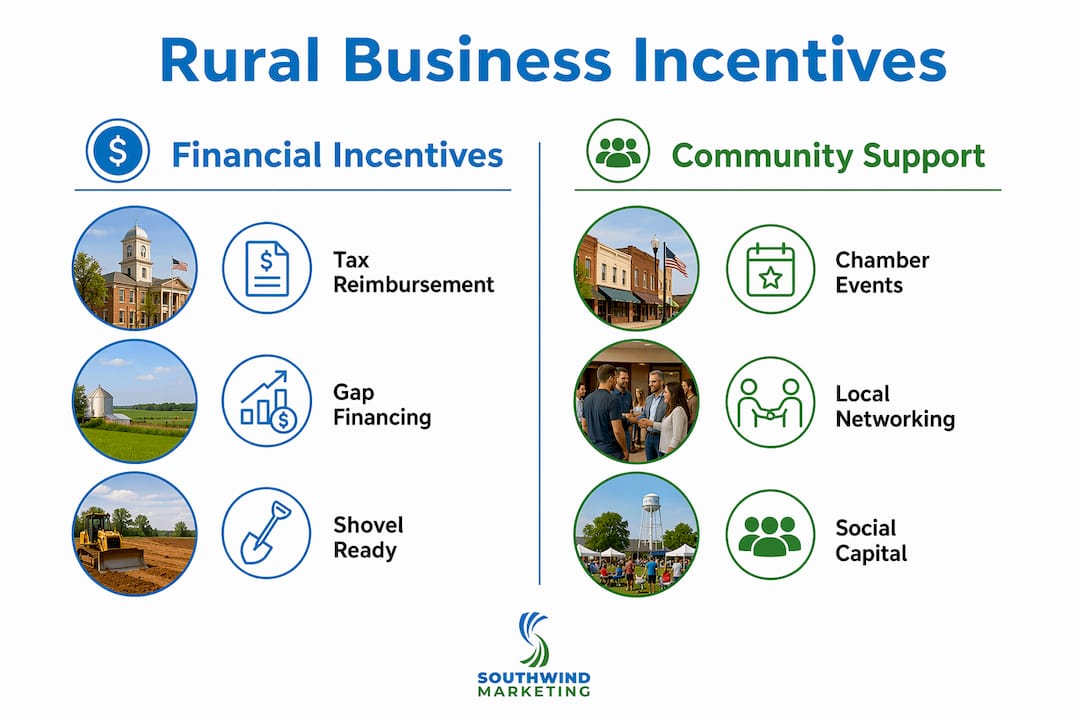
Rural business incentives are the most direct reason businesses choose small communities over metro areas. They lower the cost of entry and reduce the financial risk of early operations.
Idaho's TRI program is one of the clearest examples. Businesses in rural Idaho communities with fewer than 25,000 residents qualify by creating just 20 new full-time jobs. Urban businesses must create 50 jobs to access the same benefit. That lower threshold makes the program accessible to small and mid-sized operations that would never qualify in a city.
Gap financing programs add another layer of support. Kansas's IRONED pilot grant provides $10,000–$100,000 in gap financing with a 1:1 match to revitalize rural industrial buildings. Projects must complete renovations within 12 months and achieve tenant occupancy within 18 months. That structure rewards businesses that move decisively and plan carefully.
The economic ripple effects of these incentives extend well beyond the initial business. Small businesses represent nearly 58% of employment in rural states like North Dakota. When one business succeeds, it creates demand for local suppliers, service providers, and housing.
Key rural business incentive types include:
- Tax credits: Multi-year income or payroll tax reimbursements tied to job creation, like Idaho's TRI
- Gap financing grants: Funds that cover the difference between project costs and available private capital
- Infrastructure subsidies: State and local programs that offset utility connection or site preparation costs
- Workforce training funds: Grants tied to hiring and training local residents in new positions
Pro Tip: Before applying for any rural incentive program, confirm the exact job creation threshold for your county. Rural and urban thresholds often differ by 50% or more, and qualifying in a rural zone can unlock programs that would otherwise be out of reach.
| Incentive type | Example | Key benefit |
|---|---|---|
| Tax reimbursement | Idaho TRI (up to 30% for 15 years) | Reduces tax burden during growth phase |
| Gap financing | Kansas IRONED ($10,000–$100,000) | Covers funding gaps for building renovation |
| Shovel-ready certification | Iowa IEDA certified sites | Cuts development timeline by up to 30% |
| Lower job thresholds | Idaho rural: 20 jobs vs. 50 urban | Makes programs accessible to smaller businesses |
How does social capital drive rural business formation?
Social capital is the network of trust, relationships, and community norms that makes it easier to start and sustain a business. Rural areas carry more of it per capita than most urban centers, and that difference shows up directly in business formation data.
Research tracking rural counties between 2005 and 2014 found a 9.78% increase in business registrations for every standard deviation increase in social capital. That is not a marginal effect. It means that a community with strong civic engagement, active local organizations, and high interpersonal trust produces measurably more new businesses than a comparable community without those traits.
Rural entrepreneurship also operates differently from urban entrepreneurship. Urban business models often depend on anonymity, scale, and transactional relationships. Rural models depend on reputation, word-of-mouth referrals, and long-term relationships with customers and suppliers. That difference is a structural advantage for businesses that build genuine community ties.
The benefits of strong rural social capital for business owners include:
- Faster customer trust and loyalty, reducing marketing costs in early stages
- Access to informal networks for hiring, referrals, and problem-solving
- Community support for local businesses over outside chains
- Greater resilience during economic downturns due to mutual aid and cooperation
Pro Tip: When you open a business in a rural community, join the local chamber of commerce and attend city council meetings within your first 90 days. Those relationships will generate more referrals and goodwill than any paid advertising campaign in year one.
Rural communities also benefit from organic growth strategies that align naturally with their existing social networks. Word-of-mouth and community reputation are the most cost-effective marketing channels available to rural businesses.
Why does infrastructure readiness matter more than incentives?
Manufacturers and site selectors consistently rank infrastructure reliability above financial incentives when choosing a location. That finding surprises many economic developers who spend most of their time building incentive packages.
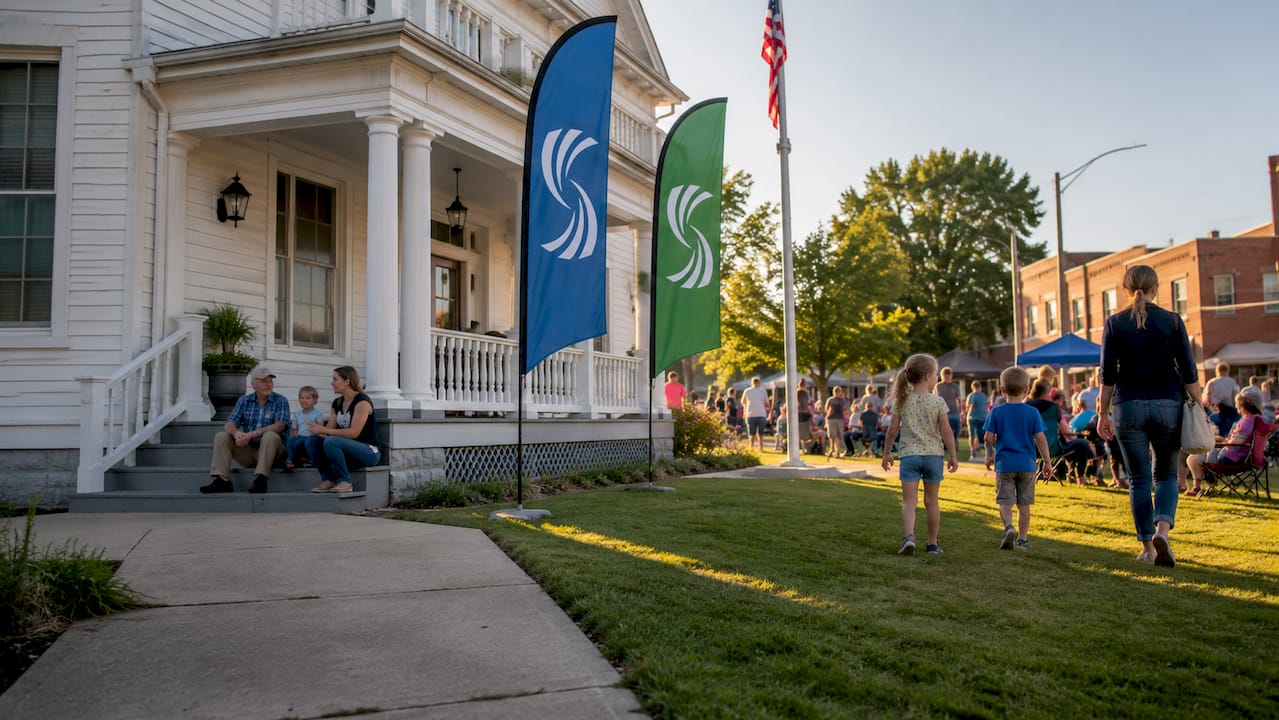
Manufacturers prioritize energy capacity, transportation access, and permitting certainty above all else. A delayed zoning approval or an unreliable power grid will end a site selection conversation faster than any tax credit can restart it. Rural communities that understand this invest in their infrastructure before they market to businesses.
Shovel-ready site certification is the most direct way to demonstrate readiness. Certified sites reduce development timelines by up to 30% by pre-verifying infrastructure, zoning, and environmental conditions. Clarinda, Iowa's Loudon Business Park earned Iowa Economic Development Authority (IEDA) certification, giving it a concrete competitive advantage over uncertified sites in neighboring communities.
The steps rural communities take to become infrastructure-ready:
- Conduct a utility capacity audit. Confirm that electric, water, and sewer systems can support industrial or commercial loads without major upgrades.
- Pursue shovel-ready certification. Work with your state economic development agency to pre-clear zoning, environmental reviews, and title issues.
- Document transportation access. Map proximity to highways, rail lines, and airports. Site selectors want this data in a single-page format.
- Establish a permitting timeline guarantee. Commit to a defined review period for building permits. Predictability is the product.
- Create a site information package. Publish infrastructure specs, utility rates, and zoning maps in a format site selectors can download immediately.
Communities that complete these steps before marketing to businesses close deals faster and attract higher-quality investment. Seasoned site selectors treat permitting delays and utility coordination failures as deal-breakers, not negotiating points.
What quality-of-life factors make rural locations appealing for businesses?
Quality of life is a business location factor that rarely appears in incentive spreadsheets but consistently influences final decisions. Workers in rural communities do not demand the same wage premiums as urban workers, because their cost of living is lower. That gap directly reduces payroll costs for employers.
Lower wage premiums and affordable living costs in rural areas reduce labor costs for employers without reducing worker satisfaction. A worker who pays $800 per month in rent does not need a $90,000 salary to feel financially secure. That math works in favor of rural employers competing for talent.
Community stability also matters to employers in ways that are hard to quantify but easy to observe. Rural workforces tend to have lower turnover rates. Long-term employees build institutional knowledge, reduce training costs, and create more consistent customer experiences. Those outcomes compound over years.
"Quality-of-life factors often trump tax breaks because workers in rural areas do not demand high wage premiums, effectively lowering labor costs for businesses. The most competitive rural communities combine affordable living, strong schools, and reliable services to attract both businesses and the workers those businesses need."
The quality-of-life advantages that influence rural business location decisions:
- Lower housing costs reduce the wage floor employers must meet to attract workers
- Shorter commutes and less congestion improve employee satisfaction and retention
- Stable, long-term community relationships reduce conflict and increase cooperation
- Successful businesses generate local tax revenue that funds schools, roads, and services, creating a self-reinforcing cycle
For rural small businesses, these quality-of-life factors are not just recruitment tools. They are the foundation of a sustainable operating model that urban competitors cannot easily copy.
Key Takeaways
Rural areas attract businesses through a combination of lower costs, targeted incentives, strong community networks, and infrastructure readiness that urban locations cannot match.
| Point | Details |
|---|---|
| Tailored incentives lower barriers | Programs like Idaho's TRI set rural job thresholds at 20 jobs, making tax credits accessible to small businesses. |
| Social capital drives formation | A one standard deviation increase in rural social capital correlates with a 9.78% rise in business registrations. |
| Infrastructure readiness closes deals | Shovel-ready certification cuts development timelines by up to 30%, giving certified rural sites a clear edge. |
| Quality of life reduces labor costs | Rural workers accept lower wage premiums due to affordable living, directly reducing employer payroll expenses. |
| Small businesses anchor local economies | Small businesses represent nearly 58% of employment in rural states, making each new business a community-wide investment. |
The rural advantage most entrepreneurs overlook
My honest observation after years of working with rural communities across Oklahoma, Kansas, Iowa, and beyond: most entrepreneurs research incentives first and infrastructure second. That order is backwards.
The businesses I have seen succeed in rural markets did not choose their location because of a tax credit. They chose it because the community was ready. The utilities were in place, the permitting process was clear, and local leaders were genuinely invested in their success. The incentives were a bonus, not the reason.
The other thing I tell every entrepreneur considering a rural site: build your local partnerships before you need them. Programs like Kansas IRONED require formal commitments from local organizations like chambers of commerce as part of the application. That requirement exists because isolated businesses fail and connected businesses survive. The grant program is just formalizing what rural communities already know.
Rural investment is a long-term decision. The communities that attract and retain businesses are the ones that treat every new employer as a neighbor, not a transaction. If you find a community that operates that way, the financial case almost always follows.
— Southwind Marketing
How Southwind Marketing supports rural business growth
Rural communities that want to attract businesses need more than a good incentive package. They need a clear, credible story that reaches site selectors, entrepreneurs, and investors before a competitor community does.
Southwind Marketing builds that story for economic development organizations, chambers of commerce, and rural small businesses across Oklahoma, Kansas, Texas, Iowa, Missouri, and Arkansas. From SEO and AI search visibility to community branding and grant program marketing, every service is built around one goal: putting rural communities in front of the right decision-makers at the right time. If your community is ready to compete for business investment, Southwind Marketing has the tools and the rural expertise to help you win.
FAQ
Why do businesses choose rural areas over cities?
Businesses choose rural areas for lower operating costs, tailored incentive programs, and stronger community networks. Rural locations also offer reduced labor costs because workers face lower living expenses and do not demand the same wage premiums as urban workers.
What financial incentives are available for rural businesses?
Rural businesses can access tax reimbursement programs, gap financing grants, and shovel-ready site subsidies. Idaho's TRI program, for example, offers up to 30% in tax credits for 15 years with a rural job creation threshold of just 20 positions.
How does social capital affect rural business success?
Higher social capital in rural communities correlates directly with higher business registration rates. Research shows a 9.78% increase in business registrations for every standard deviation increase in social capital, driven by trust, referrals, and community support networks.
What infrastructure do rural communities need to attract manufacturers?
Manufacturers require reliable energy capacity, transportation access, and predictable permitting before they will commit to a rural site. Shovel-ready certification addresses all three by pre-verifying infrastructure and zoning, cutting development timelines by up to 30%.
How do rural businesses impact local economies?
Small businesses represent nearly 58% of employment in rural states like North Dakota. Each successful rural business generates local tax revenue, creates supplier demand, and reduces retail leakage, producing economic benefits that extend well beyond the business itself.